Home Organization on a Budget: The Complete Guide
Home organization on a budget: a 5-step method, room-by-room cost ranges, no-drill storage for renters and $25, $75 and $150 plans that actually stick.
Under $100 · Renter-safe · Easy · 1 weekend to start, 4 weeks for the whole homeUpdated
In this post
Home organization on a budget comes down to one rule: get rid of things before you buy anything to hold them. Bins don't create space.
Removing stuff does. Once you've decluttered, a $25 starter kit of Dollar Tree bins, a turntable, a few hooks and masking-tape labels handles most drawers, shelves and doorways.
This guide is the hub for everything organization-related on the site. You'll get a five-step method, a "measure before you buy" rule, an honest comparison of cheap and mid-price containers, playbooks for ten rooms with cost ranges, no-drill storage for renters, a four-week January reset, and what to do with everything you remove.
Every price below is a typical shelf-price range at US retailers as of October 2026. Your total depends on how much you let go of first.
The Method: Declutter, Zone, Contain, Label, Maintain
The order matters more than the products. Start by buying bins and you end up with neatly sorted clutter and a lighter wallet. Work through these five steps for each space, one space at a time.
1. Declutter: take everything out
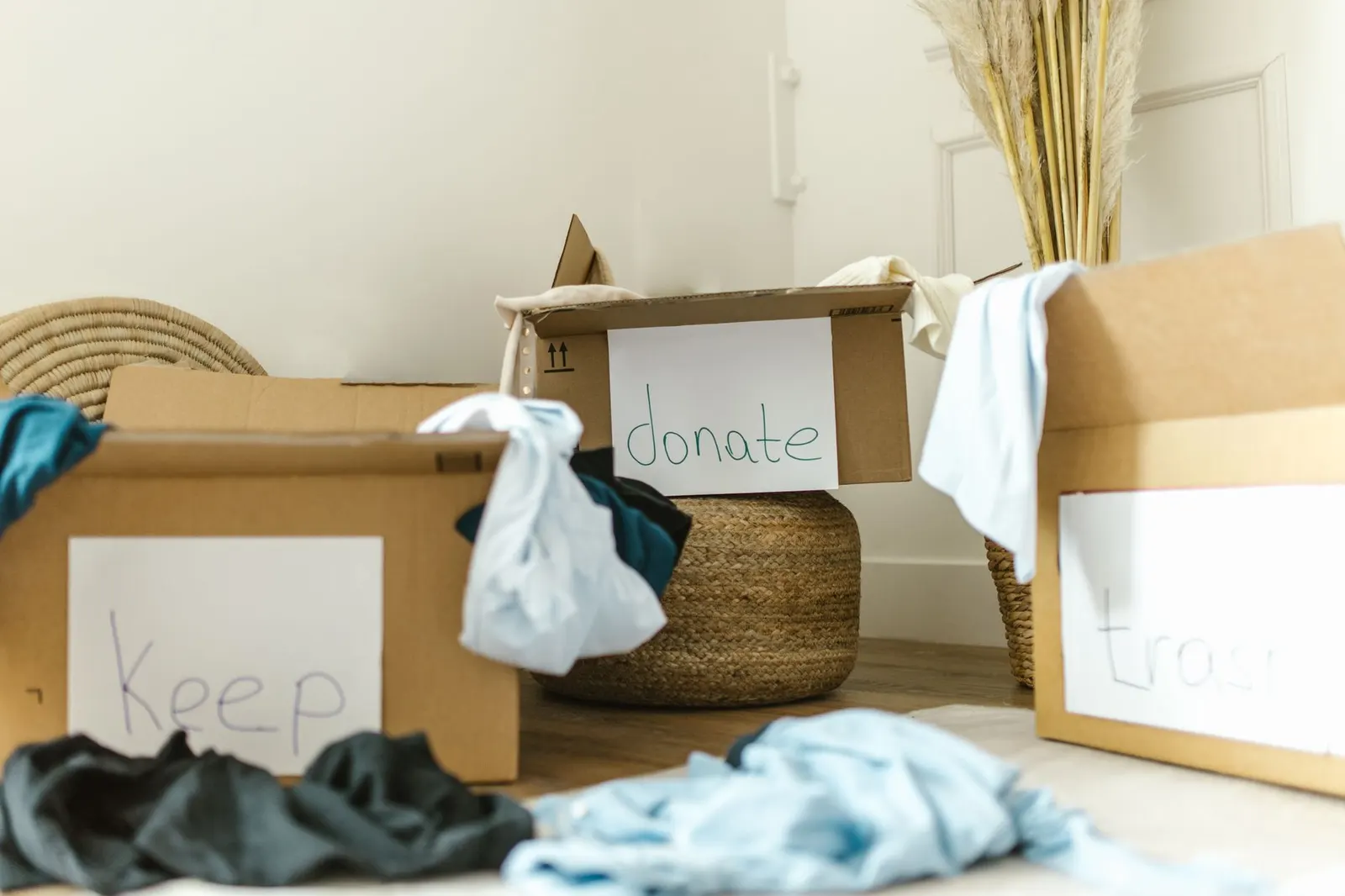
Empty the shelf, drawer or closet completely. Wipe it down. Then sort what you removed into four piles: keep, donate or sell, trash or recycle, and belongs elsewhere.
Be ruthless with duplicates. Three can openers, eleven mugs from events and a drawer of takeout soy sauce packets are where free space hides. If you haven't used something in a year and it isn't seasonal or sentimental, it probably goes.
Give the "belongs elsewhere" pile a basket and return items to their rooms at the end of the session, not mid-sort. Walking around mid-sort is how a one-hour drawer becomes a lost afternoon.
2. Zone: decide what lives where
A zone is a group of things you use together, stored where you use them. Coffee, filters and mugs go next to the coffee maker.
Keys, dog leash and sunglasses go by the door. Wrapping paper doesn't need prime real estate in December and certainly not in July.
Put daily items between knee and shoulder height. Store weekly items above or below that. Monthly and seasonal items go on the top shelf, under the bed or at the back of the closet.
3. Contain: only now, buy (or reuse) containers
Containers have one job: keep a category from spreading. You need far fewer than the organizing aisle suggests.
Start with what's free. A shoebox makes a drawer divider.
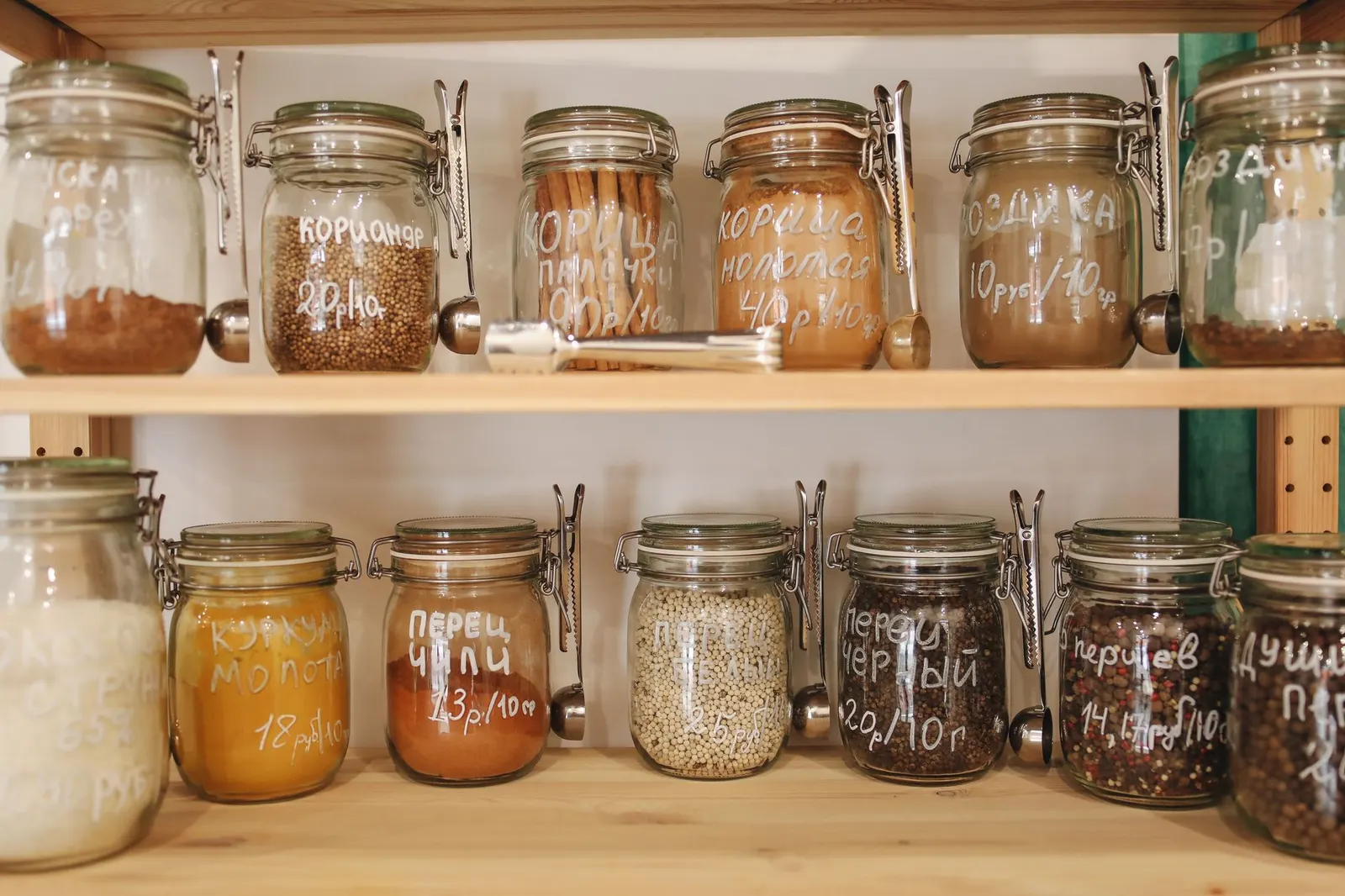
A cereal box cut on the diagonal becomes a magazine or file holder. Pasta sauce jars hold rice, beans and cotton swabs. Then fill gaps with cheap bins sized to the space you measured.
4. Label: make it obvious for everyone
Labels are what make a system survive other people. A strip of masking tape and a marker costs a few dollars and works. If you rent, it also peels off clean.
Label the shelf edge as well as the bin. When a bin is out, everyone can see where it goes back. Kids who can't read yet do better with a picture label.
5. Maintain: five minutes, every day
An organized home stays that way because of small, boring habits:
- The five-minute reset. Before bed, return everything to its zone.
- One in, one out. A new pair of shoes means an old pair leaves.
- A donation bag that lives in the closet. When something stops fitting or working, it goes straight in.
- A monthly look. Pick one zone a month and redo steps 1–4 quickly.
Measure Before You Buy
Wrong-size bins are an expensive mistake, because they get used anyway. A 12-inch bin on an 11.5-inch shelf wastes the shelf. A bin that fits but sits 4 inches short of the back wastes depth.
Before you shop, measure every space you plan to fill and write it on your phone:
- Width, depth and height of each shelf, in inches.
- Clearance under the lowest shelf for under-sink and pantry floors. Pipes and garbage disposals eat room.
- Door swing. Over-the-door organizers need a gap between the door and the frame. Check that the door still closes.
- Drawer interior, not the drawer front.
Then subtract about half an inch from each measurement so bins slide in and out. Bring a tape measure to the store. Bin sizes printed on labels are often outside dimensions, and the usable inside space is smaller.
What's Worth Buying vs. What to DIY
Not every item needs to come from the organizing aisle. Here's how the three common container levels compare.
| Dollar Tree bins | Clear stackable bins | IKEA storage | |
|---|---|---|---|
| Typical price | Most $1.25; some $1.50–$5 | About $5–$15 each | About $5–$15 for boxes; $40–$90 for a cube shelf |
| Best for | Drawers, pantry shelves, bathroom cabinets, craft supplies | Closet shelves, under-bed, garage, anything stacked | Open shelving, kids' toys, living-room storage |
| Strengths | Cheap enough to experiment; easy to replace | Lids, see-through, stack securely | Matching system; sizes stay available longer |
| Trade-offs | Thin plastic; few lids; stock and sizes vary by store | Costs more per bin; can crack in cold garages | Flat-pack assembly; fabric boxes sag when overfilled |
| Item | Save | Splurge |
|---|---|---|
| Drawer dividers | Shoeboxes or Dollar Tree trays, $0–$5 (Dollar Tree) | Bamboo expandable dividers, $15–$30 (Target, The Container Store) |
| Pantry containers | Reused glass jars, free; Dollar Tree canisters, $1.25–$5 | Matching airtight canister set, $30–$60 (Target, Walmart) |
| Closet shelf bins | Dollar Tree baskets, $1.25–$5 each | Clear stackable bins with lids, $5–$15 each (Target, Walmart) |
| Toy storage | Laundry baskets, $3–$10 (Walmart, Dollar Tree) | Cube shelf plus fabric bins, $55–$125 (IKEA, Target) |
| Labels | Masking tape and marker, $2.50–$6 (Dollar Tree, Walmart) | Label maker, $20–$45 (Walmart, Staples) |
Always DIY: drawer dividers, labels, pantry jars and anything for a space you haven't finished decluttering.
Worth paying more for: anything with a lid that you stack, bins that hold heavy items, and storage that stays visible in your living space. For more Dollar Tree tricks that don't look cheap, see the Dollar Tree, thrift and DIY guide.
Budget Plans: $25, $75 and $150
Pick the tier that matches the size of your problem, not the size of your cart. A small apartment can get a long way on the starter kit alone.
Budget breakdown: The $25 starter kit
$16.25–$36
| Item | Price range | Where to buy |
|---|---|---|
| Plastic bins and baskets, about 6 (assorted sizes)Most items $1.25; some bins run $1.50–$5. | $7.50–$15 | Dollar Tree |
| Turntable (lazy Susan), small | $1.25–$5 | Dollar Tree, Walmart |
| Adhesive hooks, small multipack | $5–$10 | Target, Walmart, Lowe's |
| Masking tape and a permanent marker (labels) | $2.50–$6 | Dollar Tree, Walmart |
| Shoeboxes, cereal boxes and jars you already own | $0 | Your recycling bin |
| Short spring tension rod(optional) | $1.25–$5 | Dollar Tree, Walmart |
| Total (without optional) | $16.25–$36 |
Prices are approximate as of October 2026 and vary by store and region. Each tier stands on its own. Start with the $25 kit, then add the next tier only for zones that still overflow after you declutter.
The $75 plan adds lids, door space and drawer order. It suits a one-bedroom apartment or a family home tackling the kitchen and closets.
Budget breakdown: The $75 plan
$55.50–$142
| Item | Price range | Where to buy |
|---|---|---|
| Clear stackable bins with lids, 4 medium | $20–$50 | Target, Walmart, The Container Store |
| Over-the-door organizer with clear pockets | $8–$25 | Walmart, Target, Amazon |
| Expandable drawer dividers, set of 2–4 | $8–$20 | Walmart, Target, IKEA |
| Expandable cabinet shelf riser | $8–$20 | Target, Walmart, HomeGoods |
| Moisture absorber tubs, 2–3 (closet or under-sink) | $4–$12 | Walmart, Home Depot, Lowe's |
| Dollar Tree bins for drawers and shelves, about 6 | $7.50–$15 | Dollar Tree |
| Total | $55.50–$142 |
Prices are approximate as of October 2026 and vary by store and region. Each tier stands on its own. Start with the $25 kit, then add the next tier only for zones that still overflow after you declutter.
The $150 plan adds real furniture-level storage: a cube shelf, under-bed bins and matching hangers. Use it when your home simply has less storage than your household needs, even after decluttering.
Budget breakdown: The $150 plan
$104–$255
| Item | Price range | Where to buy |
|---|---|---|
| Cube shelf unit, 4- or 8-cube | $40–$90 | IKEA, Walmart, Target |
| Fabric cube bins, 4 | $12–$35 | IKEA, Walmart, Target |
| Under-bed storage bins with wheels or lids, 2 | $20–$50 | IKEA, Walmart, Target |
| Slim velvet or matching plastic hangers, 30–50 | $12–$30 | Walmart, Target, HomeGoods |
| Clear stackable bins with lids, 4 medium | $20–$50 | Target, Walmart, The Container Store |
| Digital hygrometer (humidity monitor)(optional) | $10–$20 | Walmart, Home Depot, Amazon |
| Handheld label maker(optional) | $20–$45 | Walmart, Target, Staples |
| Total (without optional) | $104–$255 |
Prices are approximate as of October 2026 and vary by store and region. Each tier stands on its own. Start with the $25 kit, then add the next tier only for zones that still overflow after you declutter.
For more ways to stretch decor and storage dollars across the whole home, see the decorate on a budget guide.
Room-by-Room Playbooks
Each playbook follows the same five steps. Cost ranges assume you've decluttered first and reuse what you can.
Kitchen and pantry ($15–$60)
Pull everything out and toss expired food. Group by use: baking, breakfast, snacks, pasta and grains, cans, oils and spices.
- Turntables in corner cabinets and for oils and vinegars, $1.25–$12.
- Shelf risers double the usable height for plates and cans, $8–$20.
- Bins as drawers. A bin you pull out like a drawer makes the back of a deep shelf usable.
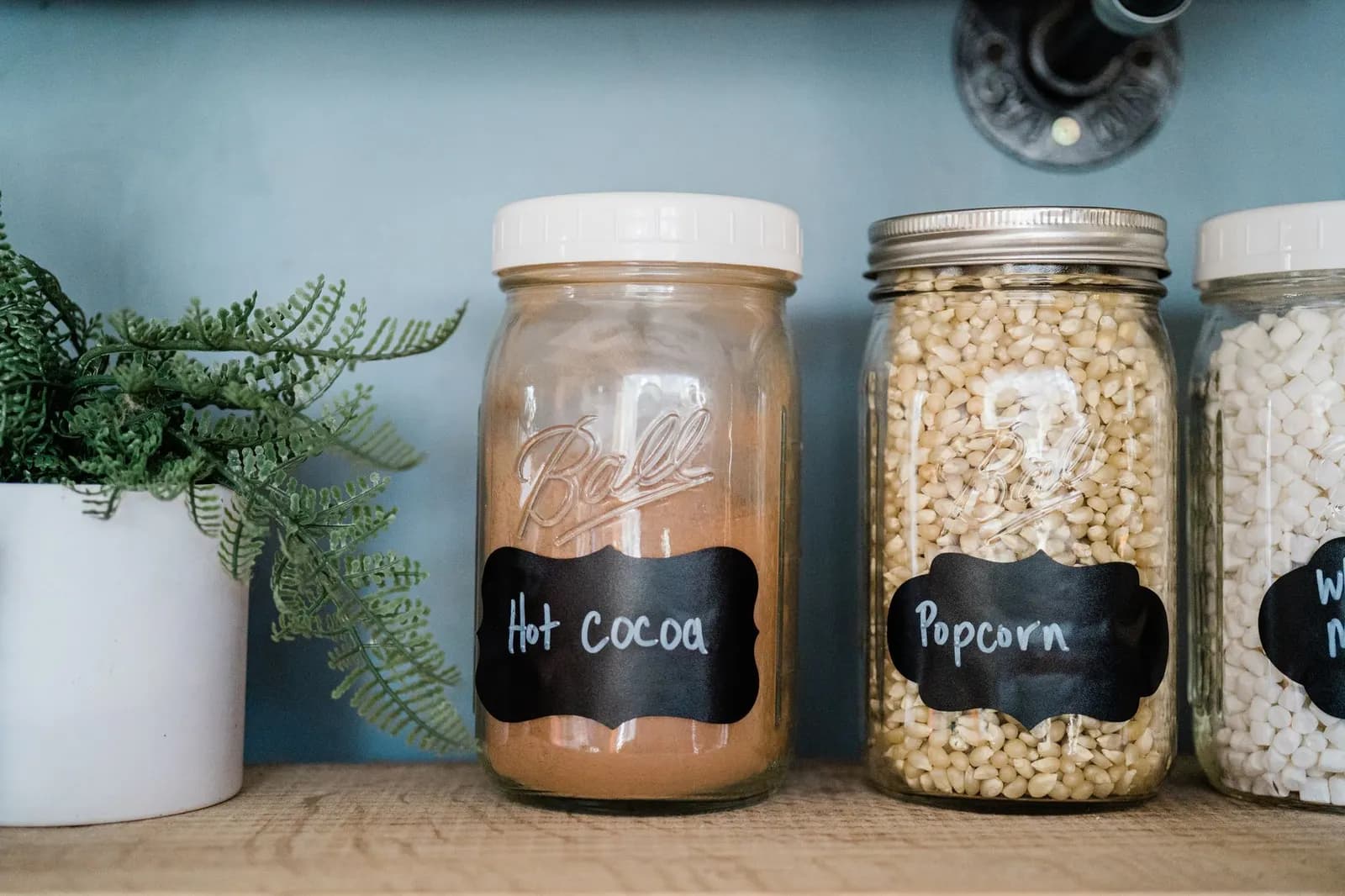
- Decant only what you use fast. Rice, oats and pasta in jars look calm. Decanting everything adds cost and work.
- Kid-height snack bin on a low shelf cuts the "can I have" questions.
The full step-by-step is in Dollar Tree pantry and kitchen organization.
Fridge ($10–$40)
Fridge bins keep small items from disappearing in the back. Clear, narrow bins at Dollar Tree, Walmart and Target run about $1.25–$10 each.
- Group by type: drinks, dairy, leftovers, condiments, snacks.
- Eat-first bin at eye level for leftovers and anything close to its date.
- Leave space for air. The FDA advises not to crowd the fridge or freezer so tightly that air can't circulate.
- Check the temperature. The FDA says to keep the fridge at or below 40°F and the freezer at 0°F, and calls an appliance thermometer the best way to know. Basic ones cost a few dollars at Walmart or Target.
Under the kitchen and bathroom sink ($10–$45)
This is the cabinet where pipes, leaks and cleaners meet. Measure around the pipes before you buy anything.
- Tension rod across the top to hang spray bottles by their triggers, $1.25–$10.
- Two-tier pull-out or stackable organizer shaped around the pipe, $15–$35.
- Shallow bin or tray on the floor to catch drips, $1.25–$8.
- Moisture absorber if the cabinet smells damp, $2–$6 per tub.
Keep cleaners in their original containers with labels on. The CPSC recommends storing cleaning products in cabinets with child safety latches or locks and in their original containers. Never pour them into food or drink containers.
Check for drips while the cabinet is empty. Report leaks to your landlord in writing if you rent. More ideas are in under-sink organization.
Bathroom ($10–$50)
Small bathrooms need vertical space and a ruthless counter.
- Clear the counter down to the things you use every day.
- Drawer bins for makeup, hair tools and first-aid basics, $1.25–$5 each.
- Over-the-toilet freestanding shelf, $25–$60 at Walmart or Target, if you have no linen closet.
- Adhesive hooks for towels and robes, used within the package rating.
- Turntable for daily skincare.
Steam makes adhesives in bathrooms trickier. Follow the product's instructions for humid rooms. The renter-specific version is tiny bathroom storage for rentals.
Closet ($20–$100)
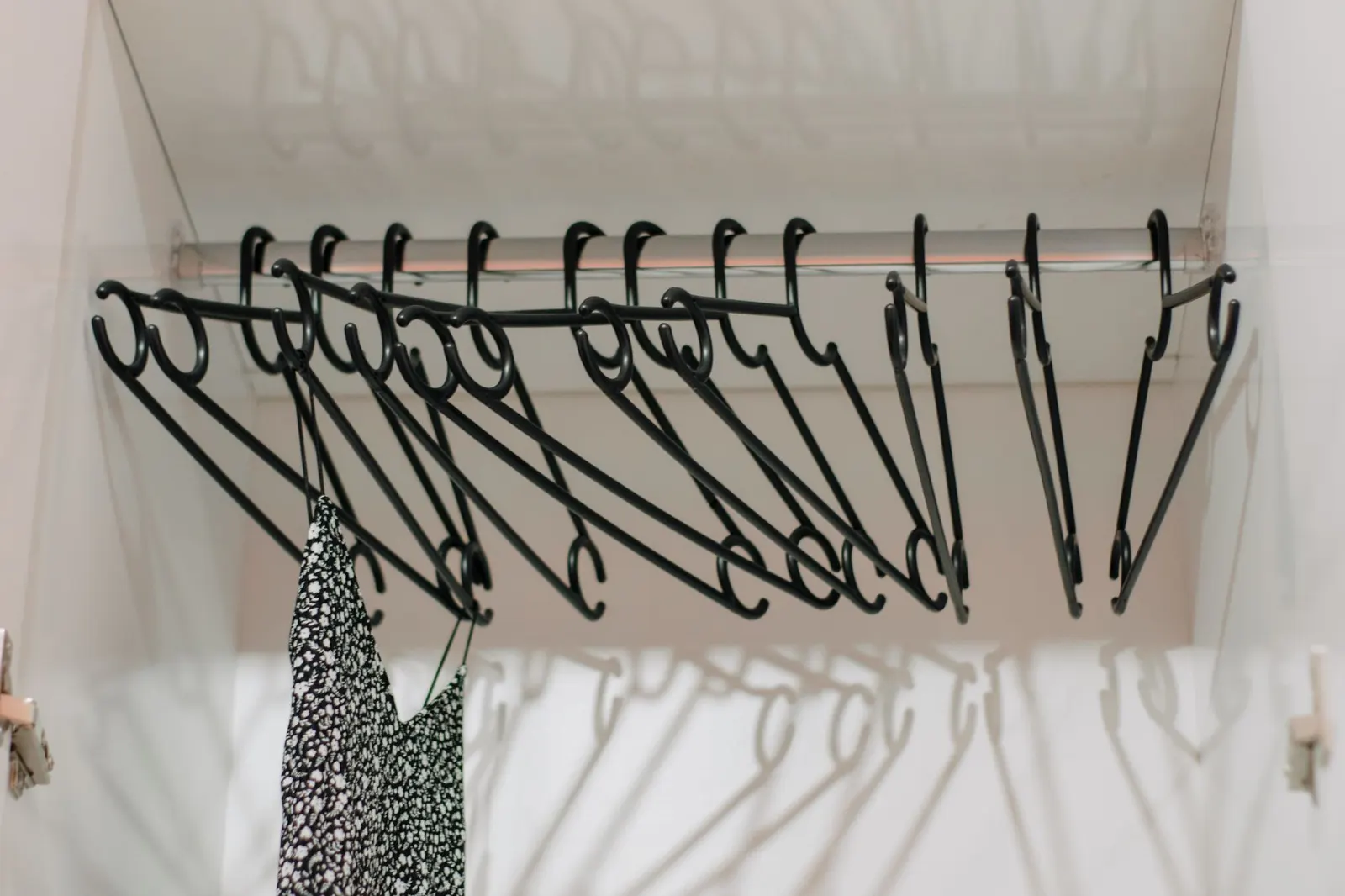
Closets reward decluttering fast. Try every questionable piece on, or use the hanger trick: turn all hangers backward and flip each one when you wear it. After a season, the backward ones show you what you don't wear.
- Matching slim hangers, $12–$30 for 30–50, free up rail space.
- Shelf dividers or clear bins keep sweater stacks from toppling.
- Over-the-door shoe organizer, $8–$25, also holds accessories and cleaning supplies.
- Second rod hung from the first for short items, $10–$25.
- Off-season clothes in lidded bins on the top shelf.
Full details are in closet organization on a budget.
Entryway ($15–$60)
The entryway catches everything you carry in. Give each item a landing spot.
- Adhesive or over-the-door hooks for bags and leashes, one per person.
- Tray or bowl for keys and sunglasses, $1.25–$15.
- Boot tray, $8–$20, to protect floors in rain and snow.
- Slim shoe rack or bench with baskets, $25–$60 at IKEA, Walmart or Target.
- Mail sorter so paper doesn't spread to the kitchen counter.
For a full layout, see the small entryway makeover on a budget.
Bedroom ($20–$80)
Your bedroom should be the calmest room. Clear surfaces first: nightstand, dresser top and the chair that collects clothes.
- Under-bed bins, $10–$25 each, for off-season clothes and extra bedding. Measure the clearance under your frame first.
- Bed risers, $10–$20, add a few inches of clearance if you need it.
- Drawer dividers for socks and underwear.
- A hamper and a "worn once" hook to replace the chair.
Small rooms need layout decisions before storage purchases. Tiny bedroom layout and storage covers bed placement and furniture that does double duty.
Kids' rooms and play areas ($15–$70)
Kids' systems must be simple enough for a kid to use alone. Fewer, bigger categories beat many small ones.
- Low open bins with picture labels: blocks, cars, dolls, art.
- Toy rotation. Keep a third of the toys in a closet bin and swap monthly. Less out means less to clean up.
- Cube shelf with fabric bins, $55–$125, for a full playroom.
- Art caddy made from a Dollar Tree bin and cups.
Safety first with any shelf. The CPSC urges anchoring furniture such as bookcases and dressers securely to the wall and storing heavier items on lower shelves.
It also advises against storing appealing items like toys where kids may be tempted to climb to reach them. If you rent, ask your landlord about anchoring. It's a small hole that's worth asking for.
For a school-year drop zone with backpacks, calendars and homework bins, see the back-to-school command center.
Laundry area ($15–$70)
Laundry spaces tend to be narrow and tall, so think vertical.
- Rolling slim cart between the washer and dryer, $20–$40.
- Tension rod above the machines for hanging shirts to air-dry.
- One bin per person for clean clothes, so folding doesn't pile up.
- Wall-mounted or over-door drying rack, $15–$40.
- Lost-sock basket and a small trash can for lint.
The full room plan is in the laundry room makeover on a budget.
Small spaces: go vertical ($20–$90)
When the floor runs out, use walls, doors and the space above things.
- Over-the-door organizers on pantry, bathroom and closet doors.
- Tall, narrow freestanding shelves instead of wide, low ones.
- Stackable bins with lids on closet shelves up to the ceiling.
- Shelves over the toilet, washer and desk.
- Furniture with storage: an ottoman with a lid, a bed with drawers, a bench with baskets.
Tall freestanding pieces can tip. Follow the anchoring advice above, and keep heavy things low.
Renter-Safe Storage (No Drilling)
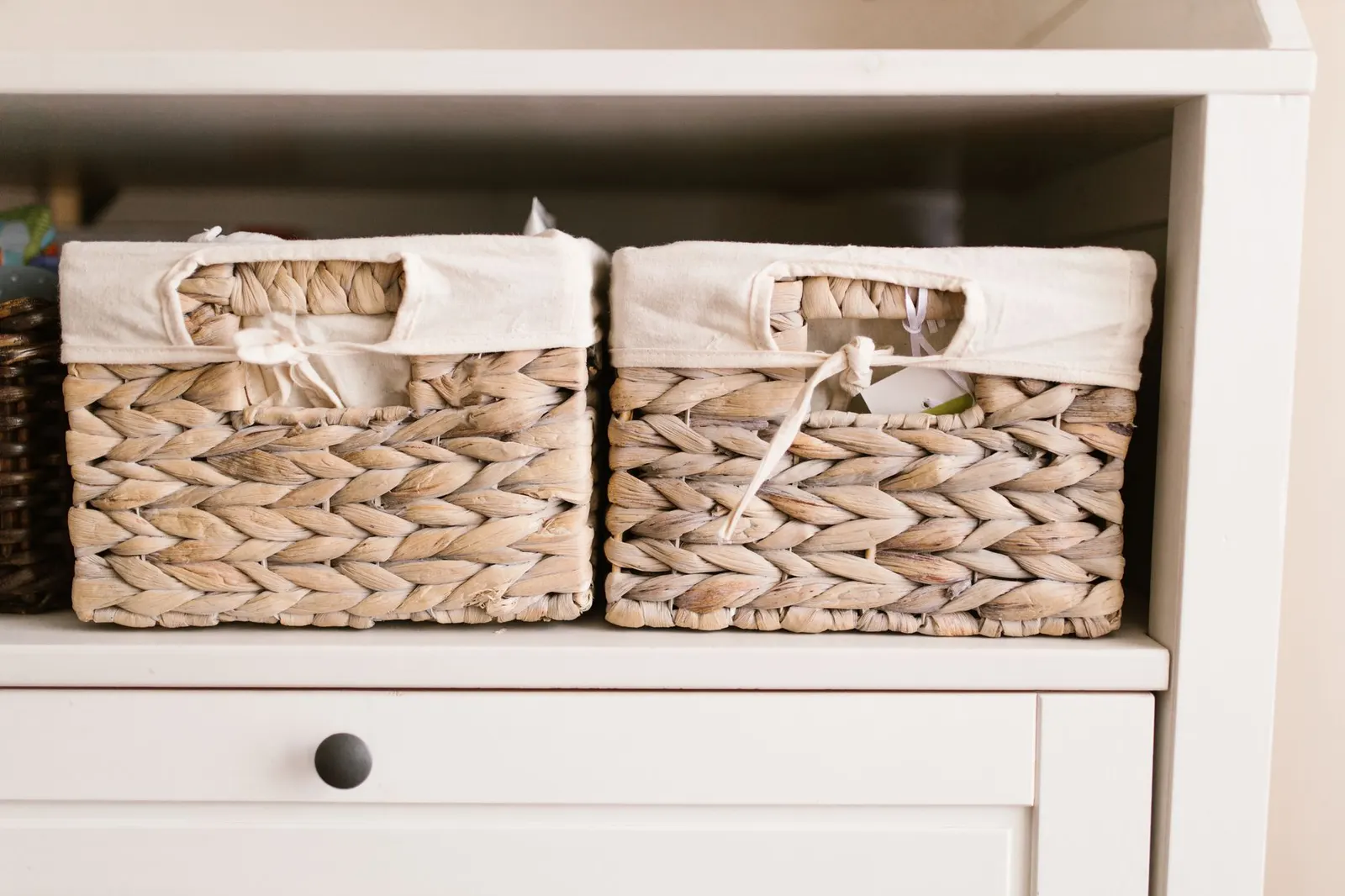
Almost everything in this guide works without a single hole. Freestanding furniture, bins, turntables, tension rods and over-the-door organizers all leave nothing behind.
Adhesive hooks and strips are reversible when you use them correctly. Command lists its Medium Utility Hooks at 3 lb and Large Utility Hooks at 5 lb.
Ratings vary by product and pack, so always go by the package in your hand. Use them only on smooth, painted surfaces. Skip textured walls, wallpaper and brick, and wait 7 days after painting before applying.
For heavier items, the hang things without nails guide explains weight tiers. The renter decorating guide covers what usually counts as damage and how to protect your deposit. Check your lease and local tenant resources, because your lease decides what's allowed.
Climate Tip: Keep Closets and Storage Dry
Humidity is the quiet enemy of stored things. Damp closets and basements lead to musty smells and mildew on clothes, linens and boxes.
A few more rules for storing fabric:
- Keep natural fibers out of damp basements. The University of Kentucky Cooperative Extension advises avoiding storage in basements or other places with high humidity and poor air circulation. It notes that humidity over 55% promotes mildew, and that attics are generally not a proper storage spot for textiles either.
- Store only clean, completely dry clothes. Body oils and food stains attract pests.
- Leave air space. Don't jam closets or bins so tightly that air can't move.
- Use breathable covers for heirlooms. The same extension guide warns against plastic bags for heirloom textiles and suggests washed muslin or clean cotton sheets instead.
Moisture absorbers are practical, low-cost help, not a fix for a leak. Swap them when they fill, keep them away from kids and pets, and tell your landlord about any recurring dampness.
The January Reset: A Four-Week Plan
January is a natural time to reset after the holidays, and after-holiday "white sales" often include storage. Check store ads for current deals.
You don't need to do the whole home in a weekend. Spread it over four weeks, about 30–60 minutes a day.
Week 1: Kitchen, pantry and fridge
- Days 1–2: Fridge and freezer. Toss expired food and wipe the shelves.
- Days 3–4: Pantry. Remove expired items and group by category. Measure shelves.
- Days 5–6: Cabinets and drawers. Cut duplicates of utensils, mugs and containers without lids.
- Day 7: Buy only the containers your measurements call for.
Week 2: Bathroom and under-sink
- Days 1–2: Medicine and toiletries. Check expiration dates.
- Days 3–4: Under-sink cabinets. Check for leaks, consolidate cleaners and add a tray.
- Days 5–6: Linen storage. Keep two sets of towels per person and a set for guests.
- Day 7: Label everything.
Week 3: Closets and bedrooms
- Days 1–3: Closets, using the hanger trick and the four piles.
- Days 4–5: Dressers and under-bed storage.
- Day 6: Pack away off-season clothes, clean and dry, in lidded bins.
- Day 7: Drop off donations before the bags move into your car permanently.
Week 4: Entryway, kids' spaces and laundry
- Days 1–2: Entryway hooks, trays and shoes.
- Days 3–5: Kids' rooms. Sort holiday gifts into the system and start a toy rotation.
- Day 6: Laundry area.
- Day 7: Walk the whole home, note what still overflows and decide whether it needs a $75 or $150 tier upgrade.
Time the reset around big gift-giving holidays. Thanksgiving falls on November 26, 2026 and Black Friday on November 27, so late fall is a good time to declutter the kitchen and toy areas before new things arrive. For the full calendar, see the seasonal decorating calendar.
What to Do With Everything You Remove
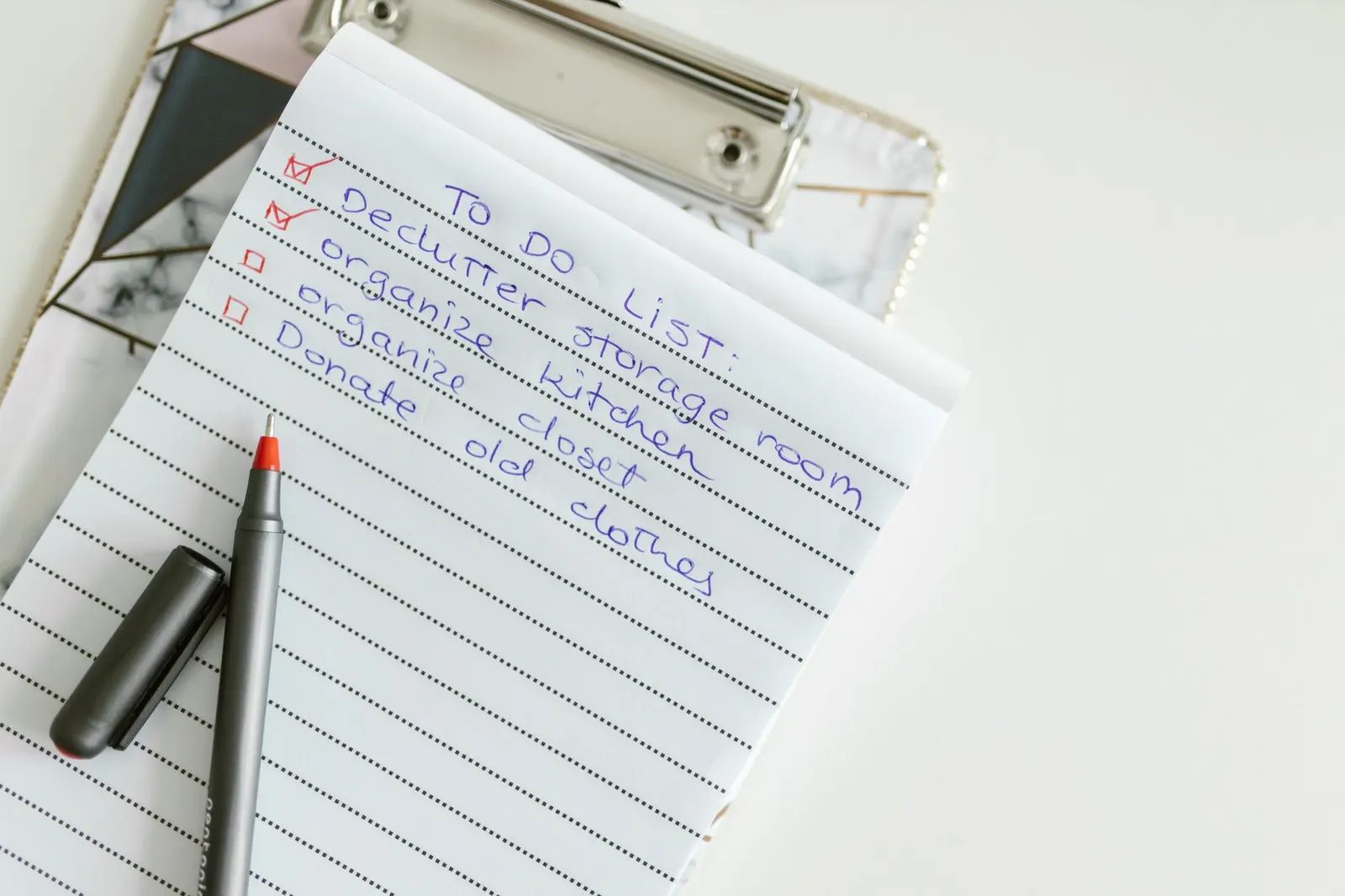
Decluttering only works if the stuff actually leaves. Set a deadline: everything in the donate or sell pile is out of the house within a week.
Donate
- Call or check online first. Local thrift stores, shelters and charities each accept different items, and many won't take damaged goods, mattresses or car seats.
- Clean and bag by category so it's easy to sort.
- Ask for a receipt if you plan to itemize. A tax professional can tell you whether it matters for you.
- Look local. Schools, libraries, animal shelters and community groups often want specific things like art supplies, books, towels and blankets.
Sell
- Sell bigger items only. Furniture, small appliances, strollers and brand-name clothes are usually worth listing. Small items rarely are.
- Use local listings like Facebook Marketplace, community buy-nothing groups or a yard sale.
- Photograph in daylight, give exact measurements and price to move.
- Meet in public places for in-person sales and bring someone along when you can.
- Set a cutoff. If it hasn't sold in two weeks, donate it.
Recycle or trash
Check your city's rules for electronics, batteries, paint and light bulbs. Many places run special drop-offs for these, and they shouldn't go in household trash.
Common Mistakes
- Buying bins first. You'll organize clutter you should have donated.
- Skipping the measuring tape. Bins that almost fit waste space and money.
- Too many categories. If you need a chart to put something away, nobody will.
- Hiding everything in opaque bins without labels. Out of sight becomes out of mind.
- Storing heavy things high. Keep heavy items low for safety and easy reach.
- Ignoring humidity. A damp closet ruins whatever is in it, no matter how neat.
Moving Into a New Place?
A new apartment is a good time to set up systems, because nothing has a home yet. Unpack by zone, not by box. The first apartment checklist and cost guide lists the basics worth buying first and what can wait.
Keep Going: The Organization Cluster
Each guide below takes one space from this page and goes deeper:
- Closet organization on a budget
- Dollar Tree pantry and kitchen organization
- Under-sink organization
- Tiny bathroom storage for rentals
- Tiny bedroom layout and storage
- Laundry room makeover on a budget
- Back-to-school command center
- Small entryway makeover on a budget
Start with one drawer this week. A finished small space gives you the momentum, and the measurements, for the next one.
Frequently asked questions
Where do I start organizing a messy house on a budget?
Start with one small, high-traffic zone, like the entryway or the cabinet under the kitchen sink, and declutter it before buying anything. A finished small space shows you what containers you actually need and keeps you from buying bins for things you're about to donate.
How can I organize my home with no money?
Declutter first, then reuse what you already own: shoeboxes as drawer dividers, cereal boxes cut down as file holders, glass jars for pantry staples and a strip of masking tape with a marker for labels. Group like items together and give each group one home.
Are Dollar Tree bins worth it for organizing?
For drawers, pantry shelves, bathroom cabinets and kids' art supplies, yes. Most cost $1.25, with some at $1.50–$5. They're thinner than mid-price bins, sizes change often and lids are rare, so use clear stackable bins for anything you stack or store long term.
What should I buy first when organizing my home?
Buy nothing until you've decluttered and measured. Then start with the cheapest things that fix daily friction: hooks by the door, a turntable for oils or cleaners, and a few bins for loose drawer items. Buy larger storage like cube shelves only for what still has no home.
How do renters add storage without drilling?
Use freestanding shelves, over-the-door organizers, tension rods, under-bed bins and adhesive hooks used within the weight rating on the package. Command lists its medium hooks at 3 lb and large hooks at 5 lb. Check your lease before mounting anything, and save packaging so you can remove items correctly.
How do I keep closets from smelling musty?
Keep indoor humidity below 60%, ideally 30–50%, as the EPA recommends. Store only clean, fully dry clothes, leave a little air space between items, add a moisture absorber in damp closets and keep natural fibers like wool, cotton and linen out of damp basements.
By [Author Name]. Prices are approximate as of October 2026. How we work.
Sources (6)
- A Brief Guide to Mold, Moisture and Your Home, US EPA (2026-02-18)
- Caring for Your Textile Heirlooms (FCS2-707), University of Kentucky Cooperative Extension (accessed 2026-10-23)
- Are You Storing Food Safely?, US Food and Drug Administration (2023-01-18)
- CPSC AnchorIt! Campaign Marks 10 Years: Fewer Furniture Tip-Overs Lead to Safer American Households, US Consumer Product Safety Commission (2025-07-29)
- Lock Up Poisons (Publication 382), US Consumer Product Safety Commission (accessed 2026-10-23)
- Product Weight Limits Guide, Command (3M) (accessed 2026-10-22)
Image credits: Photo: Polina Tankilevitch · Pexels · Pexels License; Photo: RDNE Stock project · Pexels · Pexels License; Photo: Jessica Lewis 🦋 thepaintedsquare · Pexels · Pexels License; Photo: Berna · Pexels · Pexels License.