Small Entryway Makeover on a Budget (Even Without One)
Small entryway ideas on a budget: build an entry zone for $50, $100 or $150 with a rug, hooks, mirror, shoe storage and renter-safe lighting, no drilling.
Under $100 · Renter-safe · Easy · 2–4 hoursUpdated
In this post
The best small entryway ideas on a budget start with jobs, not decor. An entry has to catch dirt, hold a coat, park your shoes, collect your keys and light the lock. Cover those five jobs and even a 3-foot strip of wall next to the door starts working like a foyer.
No foyer at all? Same plan. If your front door opens straight into the living room, you build an "entry zone" with a rug, hooks, a landing surface, a mirror and a light. Below are three itemized plans at $50, $100 and $150, all renter-friendly.
This guide is part of the bigger decorate on a budget guide, which has price tables for every room in the house.
Measure First: Door Swing and Walking Path
Ten minutes with a tape measure saves you from buying a console that blocks the door. Do this before you shop.
Mark the door swing
- Measure the door's width. That number is the radius of the arc the door sweeps when it opens.
- Open the door all the way and run painter's tape along the floor under its bottom edge as you close it. Now you can see the swing zone.
- Nothing taller than a mat goes inside the tape. No baskets, no boot tray, no console legs.
- Check the gap under the door. Slide a ruler under the closed door and note the height. Your rug or mat inside the swing must be thinner than that gap, or the door will catch on it. Low-profile mats around 1/4 inch thick are the safe choice for tight doors.
Keep a clear path
The 2021 International Residential Code (Section R311.6) sets the minimum width of a home hallway at 3 feet. That's a construction rule, not a decorating law, but it's a useful target: try to keep about 36 inches of clear walking space past anything you add.
That usually means a console or shelf 10–12 inches deep at most. In a really narrow spot, a floating shelf 6–8 inches deep is the better choice, because it leaves the floor completely open.
Check the hinge side
The wall behind the door is often wasted. If the door opens flat against it, hooks there will get hit. If there's a door stop and 4–6 inches of space, a slim over-door rack or hooks set above the handle height can work.
How to Create an Entry Zone When the Door Opens Into the Living Room
This is the "even without one" part. An entry zone is a visual boundary. You're telling the eye: this 3 x 4 ft patch is where the outside stops.
1. Rug: draw the border
A rug is the cheapest way to mark the zone. A 2 x 3 ft mat fits a tight spot. A 2 x 5 ft runner or 3 x 5 ft flat-weave reads as a real entry.
Pick washable or indoor/outdoor material. Polypropylene and flat cotton weaves wipe clean or go in the machine (check the label). Thick shag is a mistake here: it holds grit and catches under the door.
2. Hook rail: the coat closet you don't have
Mount a row of 3–5 hooks or a peg rail on the wall closest to the door, outside the swing zone. Hooks do more per inch than any furniture.
Leave about 8–10 inches between hooks so coats don't stack into one lump. If you can't drill, adhesive hooks work for light jackets, bags and keys. More options are in the guide to hanging things without nails.
3. Landing spot: slim console or floating shelf
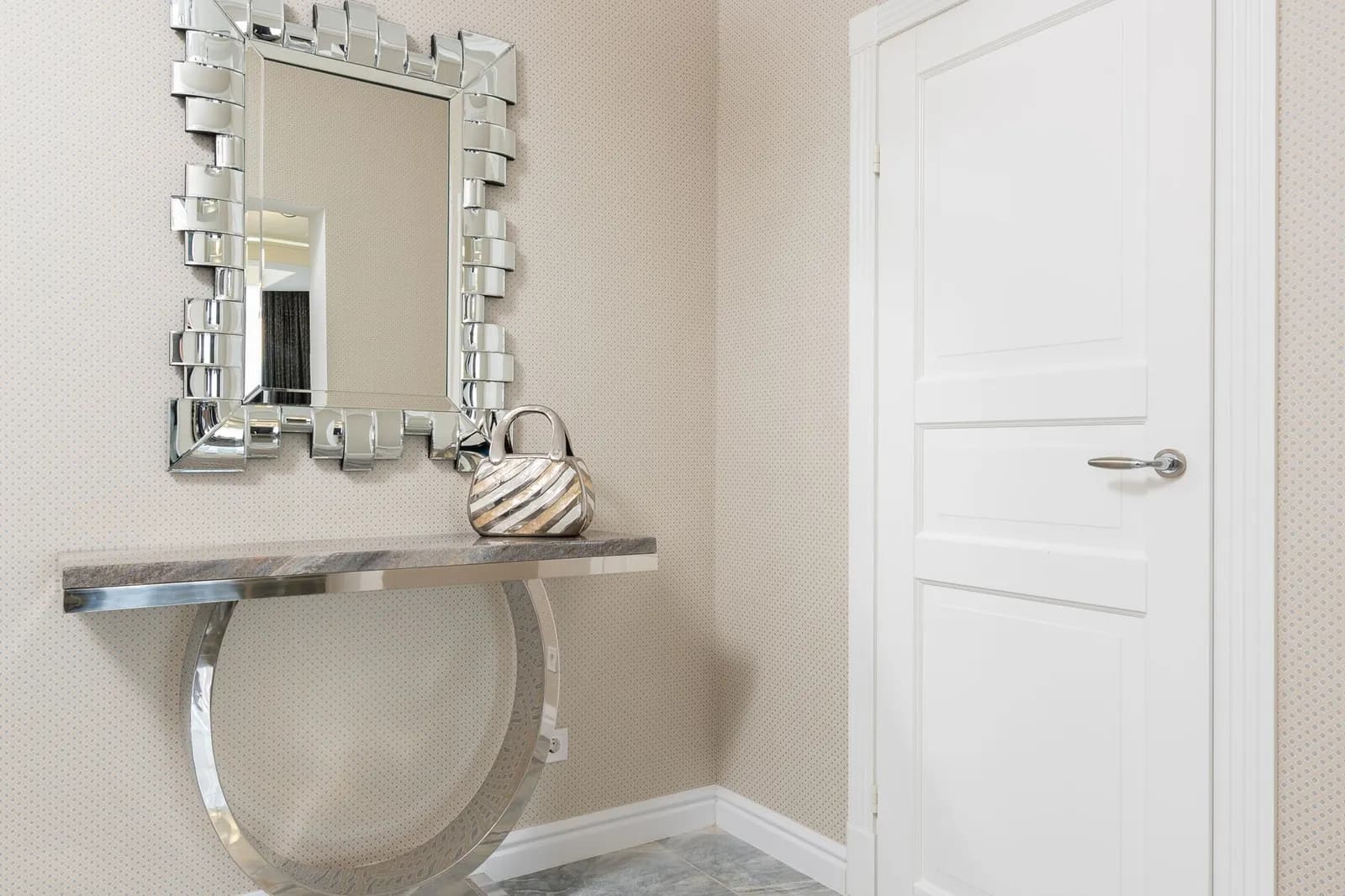
You need a flat surface at about hip height for keys, mail and sunglasses. A slim console 10–12 inches deep works if the floor allows it. A 24-inch floating shelf does the same job with zero floor footprint.
4. Mirror: the finishing move
A mirror centered above the console or shelf makes the zone look intentional. It also bounces light from the door or a nearby window. Round and arched shapes soften a boxy wall.
5. Tray and lighting
A small tray stops keys from spreading across the surface. Then add light, because an entry zone you can't see at night isn't much of a zone. Lighting gets its own section below.
If the entry is part of a one-room layout, the studio apartment layout guide shows how to zone the rest of the room around it.
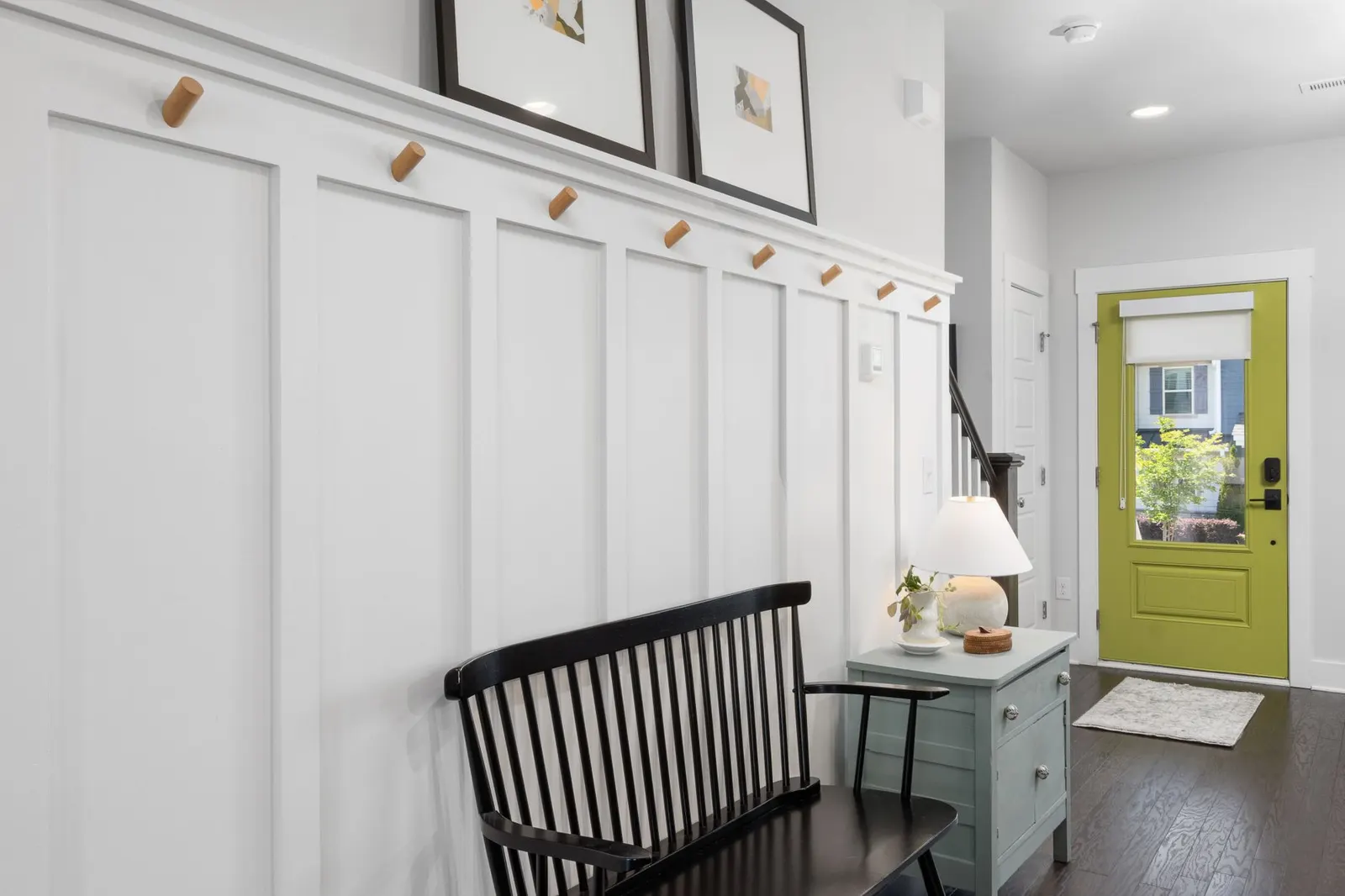
The $50, $100 and $150 Plans
Pick the plan that matches your space and your budget. Each one covers all five jobs. The bigger budgets just do them with more furniture and better light.
The $50 drop zone
For a tight spot with no room for furniture. Everything here hangs on the wall or sits on the floor.
Budget breakdown: The $50 drop zone ($30–$68)
$30.25–$68
| Item | Price range | Where to buy |
|---|---|---|
| Washable or indoor/outdoor doormat, about 2 x 3 ft | $10–$18 | Walmart, IKEA, Target |
| Adhesive wall hooks, 2–4 (check the package rating) | $6–$12 | Walmart, Target, Home Depot |
| Rubber or plastic boot tray | $8–$15 | Walmart, Home Depot, Target |
| Small tray or bowl for keys and mail | $1.25–$8 | Dollar Tree, thrift stores, HomeGoods |
| Thrifted wall or tabletop mirror | $5–$15 | Thrift stores, Facebook Marketplace |
| Total | $30.25–$68 |
Prices are approximate as of October 2026 and vary by store and region. Prices are approximate as of October 2026, for generic item types at the stores listed. Most Dollar Tree items are $1.25, with some at $1.50–$5. Thrift and Facebook Marketplace prices vary widely by city and condition.
Trade-off: adhesive hooks hold less than screwed-in hooks, and a thrifted mirror may need a cleaning and a new hanger. It's a functional entry more than a styled one.
The $100 entry zone
For a door that opens into a living room with a bit of free wall. This plan adds a rail, a shelf and real shoe storage.
Budget breakdown: The $100 entry zone ($62–$121)
$62–$121
| Item | Price range | Where to buy |
|---|---|---|
| Washable runner, about 2 x 5 ft, or a 3 x 5 ft flat-weave rug | $15–$25 | Walmart, IKEA, Target |
| Hook rail or peg rail (or 3–4 adhesive hooks) | $10–$20 | IKEA, Target, Home Depot |
| Floating shelf, about 24 in. wide | $12–$25 | IKEA, Walmart, Home Depot |
| Round or arched mirror, 16–24 in. | $12–$25 | Target, Walmart, HomeGoods |
| Two-tier shoe rack | $10–$18 | Walmart, IKEA, Amazon |
| Catchall tray or small basket | $3–$8 | Dollar Tree, HomeGoods, thrift stores |
| Total | $62–$121 |
Prices are approximate as of October 2026 and vary by store and region. Prices are approximate as of October 2026, for generic item types at the stores listed. Most Dollar Tree items are $1.25, with some at $1.50–$5. Thrift and Facebook Marketplace prices vary widely by city and condition.
Trade-off: a hook rail and floating shelf usually need screws. Renters should check the lease or use the adhesive version.
The $150 faux foyer
For anyone with 3 feet of free wall and a clear path past it. The console, lidded baskets and lighting make it look like a built-in entry.
Budget breakdown: The $150 faux foyer ($98–$177)
$98–$177
| Item | Price range | Where to buy |
|---|---|---|
| Slim console table, 10–12 in. deep (new or secondhand) | $25–$50 | IKEA, Walmart, Facebook Marketplace |
| Washable runner or 3 x 5 ft rug | $20–$35 | Walmart, Target, IKEA |
| Large mirror, 24–30 in., to hang or lean | $20–$35 | Target, HomeGoods, thrift stores |
| Battery picture light or plug-in wall sconce | $15–$25 | Amazon, Target, Home Depot |
| Two lidded baskets for under the console | $10–$20 | Target, Walmart, HomeGoods |
| Boot tray | $8–$12 | Walmart, Home Depot |
| Total | $98–$177 |
Prices are approximate as of October 2026 and vary by store and region. Prices are approximate as of October 2026, for generic item types at the stores listed. Most Dollar Tree items are $1.25, with some at $1.50–$5. Thrift and Facebook Marketplace prices vary widely by city and condition.
Trade-off: budget consoles in this range are often particleboard. They wobble on uneven floors and scratch easily. A secondhand solid-wood piece from Facebook Marketplace is sturdier for the same money.
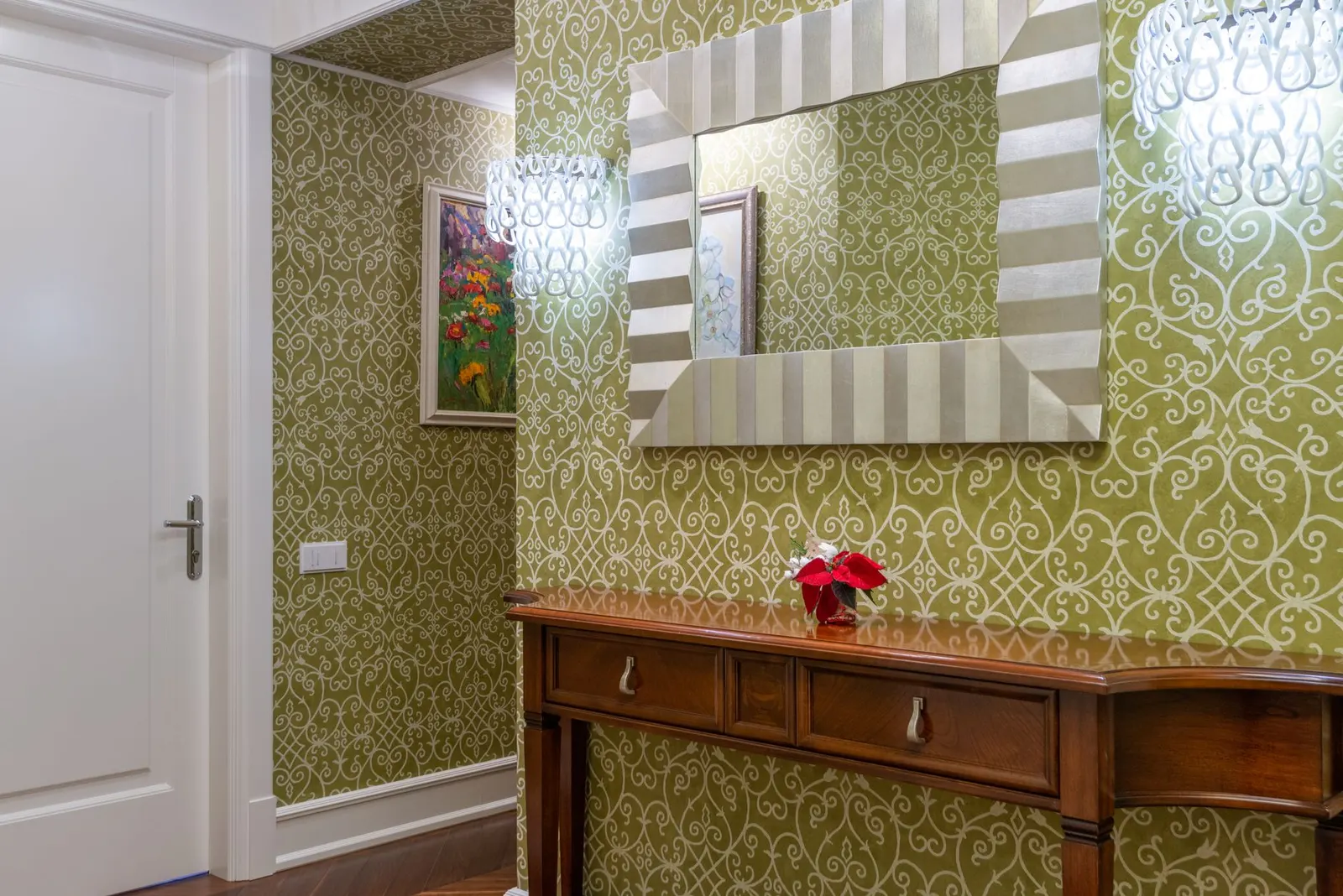
Shoe Storage for a Very Small Entryway
Shoes are what makes a small entry look messy. The fix is a limit: only this week's pairs live at the door.
- Boot tray. The simplest option. It holds 2–4 pairs and catches water and grit. Plastic or rubber trays wipe clean.
- Two-tier rack. Doubles the pairs in the same footprint. Look for one that fits under a console or a hook rail.
- Lidded baskets. Hide shoes under a console. Choose ones with a liner or a wipeable bottom.
- Over-the-door pocket organizer. If a closet door is near the entry, clear pockets hold flats and sneakers vertically.
- Shoe cabinet with flip-down drawers. Holds the most in the least depth, but it's tall and narrow, so it needs to be anchored (see safety below).
For a household-wide system, the home organization on a budget guide covers bins, labels and where off-season shoes should go.
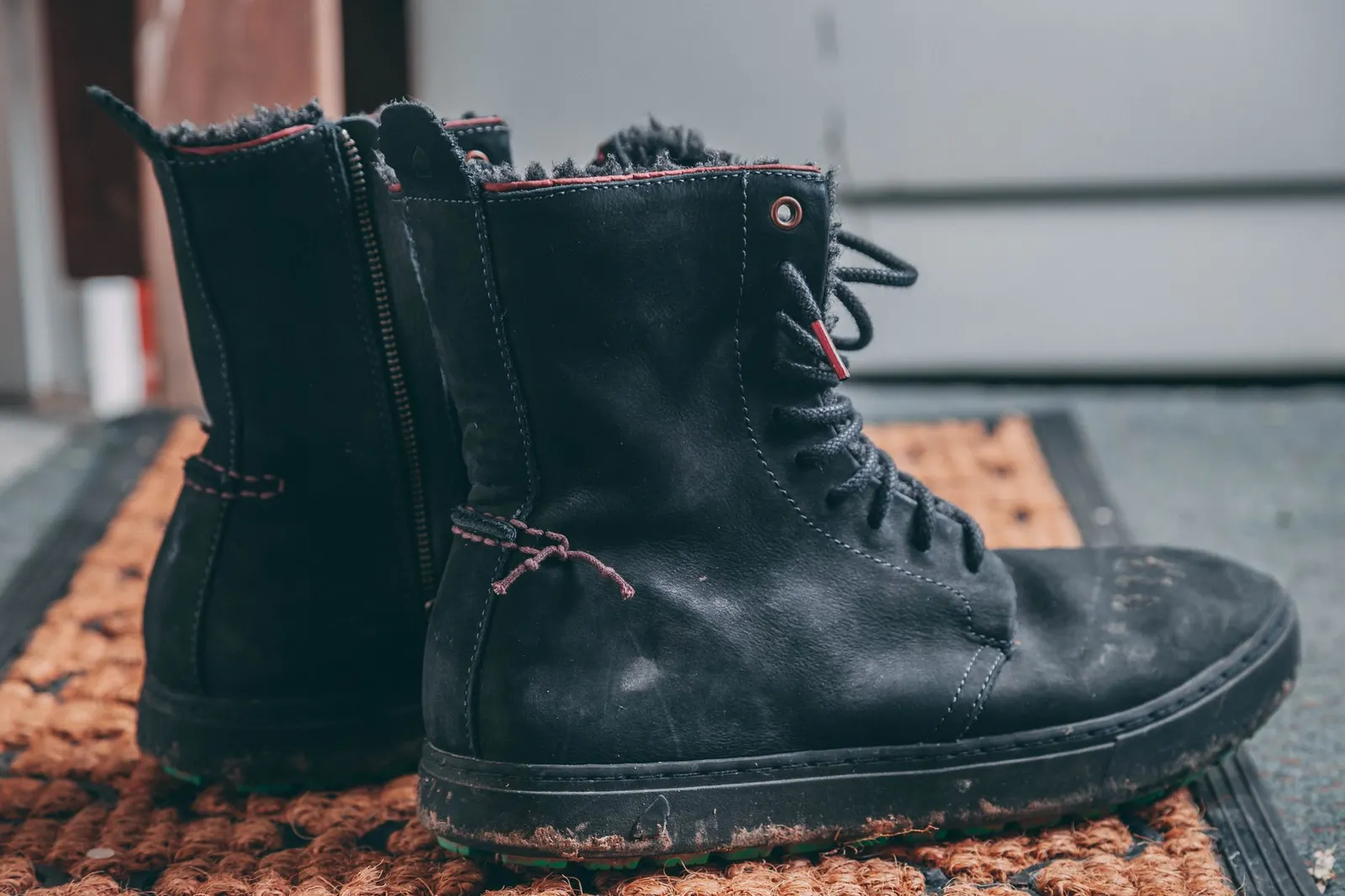
Winter Boot Tray and Mats for Salt and Slush
In cold climates, the entry takes a beating from November to March. Snow melts off boots and leaves salty, gritty water on the floor.
A few more cold-weather tips (practical advice, not lab-tested):
- Put a layer of pebbles or a cheap rack in the boot tray. Boots sit above the meltwater and dry faster.
- Keep two inside mats and rotate them. One dries while the other works.
- Add a basket or a hook for hats and gloves so they dry where you'll grab them in the morning.
- Wipe the tray weekly. Dried salt leaves a white crust that's harder to clean the longer it sits.
Renter-Safe Hooks and Over-Door Options
You can build a full entry zone without a single hole. The key is matching each item to the right hanger and respecting the weight rating.
Adhesive hooks and strips
Command hooks come in several sizes, and each one carries its own weight rating on the package. Check the package rating before you hang anything, and remember a wet winter coat weighs more than it does in October.
For a mirror or frame, Command's current Picture Hanging Strips are rated by the package: Medium strips hold 10 lb, Large 15 lb and X-Large 20 lb per 4 pairs. Older packs list 12 and 16 lb, so read yours. Command says to wait 7 days after painting and not to use them on textured walls, wallpaper or brick.
Over-door options
- Over-door hooks for a coat closet or the back of the front door. Check that the door still latches; thick hooks can stop it from closing.
- Over-door racks with 5–6 hooks hold bags and dog leashes.
- Pocket shoe organizers on a nearby closet door.
Stick felt pads on the back of any over-door piece so it doesn't scrape the paint.
For a family entry that doubles as a backpack drop, the back-to-school command center guide adds a calendar, mail sorter and a hook for each person.
Cord-Free Lighting for a Dark Entry
Many entries have no overhead light near the door and no outlet where you want a lamp. You don't need an electrician.
- Battery or rechargeable picture light mounted above the mirror. It washes the wall in light and makes a cheap mirror look like a feature.
- Plug-in wall sconce if there's an outlet within reach. Run the cord down the wall in a paintable cord cover.
- Rechargeable motion-sensor puck lights under a floating shelf, so you can see the tray when you walk in.
- A small table lamp on the console if there's an outlet nearby.
Pick warm bulbs. ENERGY STAR's bulb checklist lists 2700K–3000K as warm or soft white, the same color as old incandescent bulbs. An entry lit at 5000K feels like a garage.
The renter lighting without hardwiring guide compares plug-in sconces, battery lights and smart bulbs in more detail.
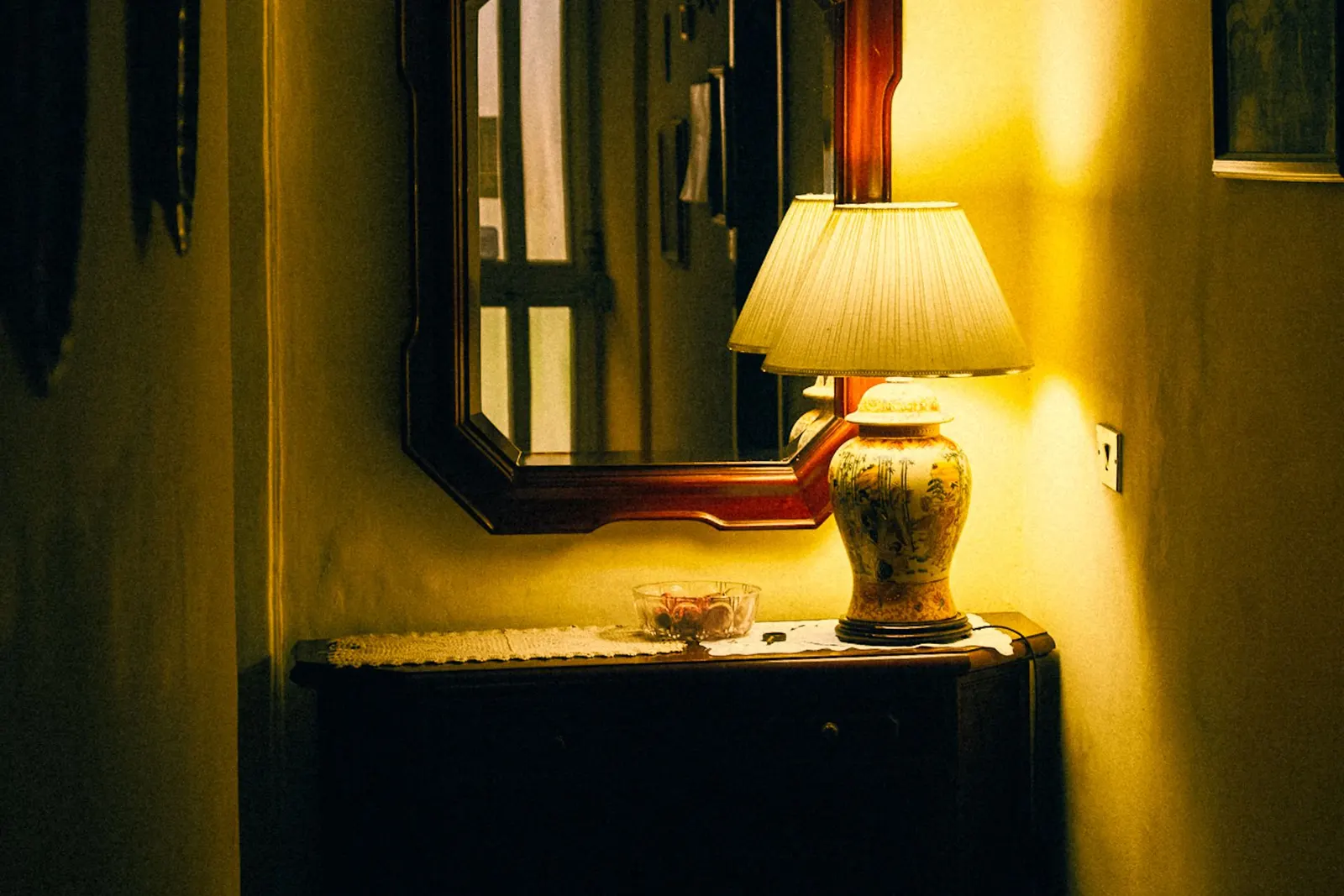
Mirror Safety: Anchor or Lean
A mirror by the door gets bumped by bags, kids and dogs. Hang it securely or lean it the safe way.
- Hang it with hardware rated for its weight. For heavier mirrors, screws into a stud or wall anchors are more secure than adhesive. Ask your landlord before drilling.
- Lean it only if it's on a stable floor, with a non-slip pad under the base and the top edge resting against the wall. Keep leaning mirrors out of high-traffic paths and away from the door swing. This is practical advice, not a safety standard.
For tall furniture, CPSC's Anchor It campaign is clear: anchor all furniture with drawers, doors and shelves to the wall to prevent tip-overs. In an entry, that means a tall shoe cabinet or a tall narrow console with drawers. Use an inexpensive anti-tip kit, and ask your landlord first, since it needs a screw in the wall.
Seasonal Styling That Doesn't Take Over
The console or shelf is a small stage. Swap 2–3 things a season and leave the rest.
- Fall (now): a small pumpkin, a bowl of pinecones or a sprig of dried leaves next to the tray. Thanksgiving is November 26, so this lasts until the holiday swap.
- Winter holidays: a short garland across the shelf, a basket for gloves, and flameless candles. USFA advises keeping real candles at least 12 inches from anything that can burn and blowing them out when you leave the room. Coats on hooks are right there, so go flameless.
- Spring: a jar of grocery-store tulips and a lighter rug.
- Summer: a bowl of lemons, a basket for sunscreen and a sunhat hook.
Store seasonal pieces in one labeled bin, so the next swap takes five minutes.
Common Mistakes
- Buying before measuring. A console that hits the door swing goes back to the store.
- A thick rug under the door. If it catches, the door scuffs it every day and it bunches up.
- Too many hooks for too many coats. Hooks fill up. Keep one coat per person at the door and move the rest to a closet.
- Tiny decor. Five small objects on a shelf read as clutter. One mirror, one tray and one plant read as styled.
- No light. A beautiful entry you can't see at 6 p.m. in December doesn't help.
- Ignoring weight ratings. A loaded tote bag can be heavier than it looks. Check the hook's package rating.
Make a Small Entry Feel Bigger
Small entries benefit from the same tricks as any tight room: a mirror placed to reflect light, a light paint color or a bright runner, and nothing on the floor that doesn't need to be there. The make a small room look bigger guide covers mirror placement, rug sizing and color in more depth.
Start with the $50 drop zone this weekend. Live with it for a week, notice what still lands on the floor or the couch, and spend the next $50 on that problem.
Frequently asked questions
How do I create an entryway when my front door opens into the living room?
Define a small zone with three things: a washable rug just inside the door, hooks or a hook rail on the nearest wall, and a landing spot for keys, such as a floating shelf or slim console. Add a mirror above it and a lamp or battery light so the area reads as its own space.
How can I decorate a small entryway cheaply?
Start with a washable doormat, adhesive hooks, a boot tray, a thrifted mirror and a small tray for keys. That set costs about $30–$68 at Walmart, Target, Dollar Tree and thrift stores, and it covers the jobs an entry needs: wiping feet, hanging coats and catching keys.
What should every entryway have?
A mat or rug to catch dirt, somewhere to hang a coat and bag, a place for shoes, a spot for keys and mail, and enough light to see the lock at night. A mirror is a bonus: it bounces light and gives you a last look before you leave.
How do I store shoes in a small entryway?
Keep only the pairs you wear this week at the door. Use a two-tier rack or boot tray for daily pairs, lidded baskets under a console for the rest, or an over-the-door pocket organizer on a nearby closet door. Move off-season shoes to a closet or under the bed.
How high should I hang entryway hooks?
As a practical rule of thumb, set adult coat hooks around 60–66 inches from the floor and a second row for kids around 36–48 inches. Keep them out of the door's swing path and check that long coats don't drag on the floor or the boot tray.
By [Author Name]. Prices are approximate as of October 2026. How we work.
Sources (8)
- Product Weight Limits Guide, Command (3M) (accessed 2026-10-22)
- How to Use Command Strips for Hanging Pictures, Command (3M) (accessed 2026-10-22)
- Anchor It! (furniture and TV tip-over prevention), US Consumer Product Safety Commission (accessed 2026-10-23)
- 2021 International Residential Code, Chapter 3, Section R311.6 Hallways, International Code Council (accessed 2026-10-23)
- Minimum Residential Hallway Width Per Code, Building Code Trainer (accessed 2026-10-23)
- The Dos and Don'ts of Using Ice Melt, Bob Vila (2020-12-09)
- Light Bulb Purchasing Checklist, ENERGY STAR (US EPA) (accessed 2026-10-23)
- Candle Fire Safety, US Fire Administration (FEMA) (2023-04-01)
Image credits: Photo: Max Vakhtbovych · Pexels · Pexels License; Photo: Curtis Adams · Pexels · Pexels License; Photo: Craig Adderley · Pexels · Pexels License; Photo: Kate Dedetash · Pexels · Pexels License.