Dollar Tree & Thrift Store Decor: The Complete DIY Guide
Dollar Tree DIY home decor plus thrift strategy: what to buy and skip, flip cost math, paint techniques, a $50 tool kit and safety checks, October 2026.
Under $25 · Renter-safe · Easy · 1 hour to 1 weekend per projectUpdated
In this post
Dollar Tree DIY home decor and thrift store finds work best as a team. Dollar Tree gives you cheap, plain building blocks: glass, mirrors, frames, wood shapes. The thrift store gives you the real materials that make a room look finished: solid wood, brass, heavy glass, lamps with good bones.
This guide covers both. You'll get how Dollar Tree pricing works in 2026, what to buy and skip at each kind of store, a cost ledger for a real furniture flip, the five techniques that cover most projects, a starter tool kit under $50, and the safety checks that matter with secondhand goods.
If you're planning a whole room rather than one project, start with the room-by-room budget decorating guide and come back here for the DIY parts.
How Dollar Tree Pricing Works in 2026
Dollar Tree is no longer a single-price store, and planning a project around "everything costs the same" will throw off your budget.
- The base price is $1.25. The move from $1 to $1.25 started in late 2021. Most items still sit at $1.25.
- Some items cost more. Stores with the multi-price assortment carry higher price points, commonly $1.50 to $5. The exact mix varies by store, so check the shelf tag.
- More stores carry the multi-price mix. In its August 27, 2026 results, Dollar Tree said it converted or added about 710 stores to the multi-price format, "ending the quarter with approximately 6,600 multi-price stores."
What that means for a project budget
Budget most decor building blocks at $1.25 each, and add a cushion of $1–$4 per item for anything larger, heavier or seasonal. Prices vary by store, so check the shelf tag or the price scanner before you buy ten of something.
Paint, sealer and glue usually aren't the best value at Dollar Tree for furniture work. Craft acrylic for small pieces is fine there. For spray paint, topcoats and furniture paint, plan to buy at Walmart, Home Depot or Lowe's.
What to Buy at Dollar Tree for Decor (and What to Skip)
The rule is simple: buy plain shapes that you'll change, and skip anything whose look depends on its finish.

Worth buying
- Glass vases and cylinders. Plain glass takes spray paint, baking soda texture and paint washes. Buy three in different heights so they group well.
- Round and square mirrors. Small mirrors become trays, a mirror wall cluster, or a vanity riser with a painted rim.
- Picture frames. The same frame comes in bulk, and a gallery looks expensive mostly when every frame matches. Spray them all one color and add mats cut from cardstock.
- Glass candle holders and candlesticks. Matte black, cream or terracotta paint makes them read as ceramic or iron. Stacking two before painting makes one taller piece.
- Baskets and woven bins. Good for hidden storage on open shelves. Check the weave, since some fray quickly; they're best for light items like throws or mail.
- Faux florals and greenery, selectively. Single stems of eucalyptus, olive or grasses look better than bunches of bright flowers. Bend the stems so they don't stand perfectly straight, and mix in one or two real branches.
- Wood plaques, beads and shapes. These become beaded trays, painted signs without words, and bases for risers.
- Craft supplies. Foam brushes, rags, gloves and drop cloths are fine here and don't need to be fancy.
Usually skip
- Anything with printed sayings or glitter. Words date a piece and are hard to paint over cleanly.
- Thin plastic with shiny gold trim. The plastic shine is the giveaway up close, and paint chips off flexible plastic.
- Foam and resin pieces with visible mold seams. You can sand a seam, but it's rarely worth the time.
- Tiny decor in bulk. Lots of small objects scattered around look like clutter. One large group beats ten little pieces.
- Candles you'll burn near fabric. Real candles are fine in a stable holder away from curtains. Keep them at least 12 inches from anything that can burn and blow them out when you leave the room, per the US Fire Administration. For shelves and mantels with garland, flameless LED candles are the safer swap.
For eleven step-by-step projects with these items, see Dollar Tree decor hacks that look expensive. For a seasonal example, the $40 Dollar Tree Thanksgiving table works the same rules into a centerpiece.
Thrift Store Decorating Ideas: Where to Shop
Each kind of secondhand source has its own strengths. Use the cheap ones for small decor and the bigger ones for furniture.
Goodwill and Salvation Army
Chain thrift stores turn over stock constantly, so frequent short visits beat one long trip. They're strong on frames, lamps, glassware, baskets and small side tables. Some Goodwill regions run color-tag discounts by the week; ask at the register how your store does it.
Local and charity thrift shops
Smaller shops price less consistently, which cuts both ways. You can find a brass candlestick priced like glass, or a common lamp priced like an antique. They're also more likely to hold vintage textiles and odd pieces of furniture.
Estate sales
Estate sales sell the contents of a whole home, often with older solid-wood furniture, real brass, heavy glass and framed art. Prices start higher. Check the listing for a final-day discount, since some sale companies post one, and arrive early on day one if you want a specific piece.
Facebook Marketplace
Marketplace is the place for larger furniture: dressers, bookcases, dining chairs. You can search by keyword and filter by distance, and sellers who need something gone fast often price low.
Basic rules: see the piece in person before you pay, don't send deposits to hold an item, meet in a public spot when the item is small enough, and bring a tape measure and a friend for pickups. The full checklist, including the scams to watch for, is in the Facebook Marketplace furniture guide.
What to Look For at the Thrift Store
Look past color and finish. Paint fixes those. Look for material, weight and shape, which paint can't fix.

Solid wood
Check the edges and underside. Solid wood shows grain that continues around corners.
Veneer over particleboard shows a thin skin and a crumbly core at chipped edges. Solid pieces feel heavy for their size, and drawers often have dovetail joints instead of staples.
Small scratches, water rings and dated stain are all fixable. Swelling, split particleboard and drawers that won't run straight are not worth the trouble.
Brass
Real brass is heavy, and a magnet won't stick to solid brass. Tarnish is fine and cleans up; brass-plated steel that's flaking is harder to save. Brass candlesticks, trays, hooks and lamp bases are the classic finds, and they anchor the neo deco look for less.
Glass and ceramics
Look for heavy glass, colored glass (amber, smoke, green) and plain pottery. Run a finger around rims for chips. Cabbage-shaped plates and leaf-pattern ceramics fit the cabbagecore trend on a budget.
Frames and art
Thrift frames are often solid wood and much larger than anything at Dollar Tree. Ignore the art inside; buy for the frame and the glass.
Paint the frame, then add a free printable, a vintage map or pressed leaves. More ideas are in cheap wall art ideas.
Lamps
Lamp bases with good shapes, such as ceramic gourds, brass columns or glass jars, are common thrift finds. A new shade changes the whole look.
Before you buy, check that the cord isn't cracked, frayed or brittle, and that the socket isn't loose. If either looks bad, skip it or plan on a rewiring kit and follow its instructions closely; if you aren't comfortable with that, leave the lamp on the shelf.
For a longer shopping list and the items that sell for more than they cost, see thrift store decor: what to buy, what to skip.
What to Skip or Inspect Carefully
A few secondhand items carry real risks. These are the ones to check, or pass on entirely.
Upholstered furniture and mattresses: check for bed bugs
EPA's advice is direct: "Check secondhand furniture, beds and couches for any signs of bed bug infestation before bringing them home." Use a flashlight to look along seams, piping, cushion zippers, under the dust cover and in wood joints. Signs include tiny dark spots, shed skins and live bugs.
If you can't inspect it well, don't bring it inside. Hard furniture (wood, metal, glass) is far easier to check and clean than anything with fabric and foam.
Cribs, bassinets and car seats: skip them for decor and use
CPSC's resale guidance notes that "products used in the nursery, especially cribs and bassinets, have caused deaths" and that used products "have been the subject of numerous recalls." It also tells resellers: "Do not sell any broken or wobbly nursery furniture." Don't buy an old crib to use for a baby, and don't use one as a decor piece in a child's room.
For car seats, NHTSA's used car seat checklist asks, among other things, whether the seat has ever been in a moderate to severe crash and whether its labels show the manufacture date and model number so you can check for recalls. A thrift store usually can't answer those questions, so buy car seats new.
Before buying any children's product secondhand, search the item on CPSC's recall site, SaferProducts.gov.
Old painted furniture: assume it may have lead paint
Take this one seriously on any furniture flip. EPA says that if your home was built before 1978, it is more likely to have lead-based paint, and the same date matters for furniture. The federal ban on lead-containing paint on consumer furniture (16 CFR 1303) applies to items manufactured after February 27, 1978.
So for any painted piece that might be older than that:
- Don't sand, scrape or heat-strip it. EPA advises against removing lead paint yourself. If sanding can't be avoided, it says to wet the area first, sand as little as possible, and clean up thoroughly with a damp cloth and a HEPA vacuum, never dry sweeping.
- Don't rely on a quick home test. EPA notes that CPSC doesn't consider lead test kits reliable for consumer products such as toys and jewelry.
- Paint over it only if it's intact. Paint in good condition is less of a problem than chipping or peeling paint. Clean it, skip the scuff sanding, and use a bonding primer.
- Pass on chipping pieces for homes with kids. EPA's lead guidance focuses on children because they're most at risk.
Unpainted wood with an original clear finish doesn't carry this concern in the same way, which is one more reason to favor it.
The Thrift-Flip Cost Ledger
Here's the math behind a typical flip: a solid-wood nightstand painted and sealed with refreshed hardware. Ranges reflect thrift and shelf prices as of October 2026.
Budget breakdown: Signature flip: thrifted wood nightstand
$49.50–$121
| Item | Price range | Where to buy |
|---|---|---|
| Solid-wood nightstand or small side table (secondhand) | $10–$40 | Goodwill, Salvation Army, local thrift, Facebook Marketplace |
| Chalk-style furniture paint (quart) | $15–$30 | Walmart, Home Depot, Lowe's |
| Clear water-based topcoat, matte or satin (small can) | $10–$20 | Home Depot, Lowe's, Walmart |
| Degreasing cleaner and scuff pad | $4–$10 | Walmart, Home Depot |
| Metallic wax paste for hardware (small tube) | $8–$15 | Walmart, Amazon, craft stores |
| Foam brushes, rags and drop cloth | $2.50–$6 | Dollar Tree |
| New knobs, if the old ones are missing (2)(optional) | $4–$12 | Home Depot, Lowe's, Amazon |
| Total (without optional) | $49.50–$121 |
Prices are approximate as of October 2026 and vary by store and region. Prices are approximate as of October 2026. Most Dollar Tree items are $1.25, with some higher price points ($1.50–$5); thrift prices vary widely by store and region.
Adding it up
| Line | Low | High |
|---|---|---|
| Purchase price (thrift or Marketplace) | $10 | $40 |
| Supplies (paint, topcoat, cleaner, wax, brushes) | $40 | $81 |
| Optional new knobs | $0 | $12 |
| Cash total | $50 | $133 |
| Your time (cleaning, painting, drying between coats) | 4 hours | 8 hours |
Supplies look expensive on the first flip because you're buying a full quart of paint and a can of topcoat. A quart covers more than one nightstand, so the second and third pieces cost far less: roughly the purchase price plus $5–$15 in supplies.
Compared with buying new
New solid-wood nightstands from premium catalog retailers commonly list in the hundreds of dollars. Livingetc's Pottery Barn nightstand guide, for example, shows list prices of $299 and $399 before sale discounts. Mass-market nightstands at Target, Walmart or IKEA cost less, but many are particleboard.
So the first flip saves roughly $170–$350 against a $299–$399 premium piece, and it costs 4–8 of your hours. Whether that's worth it depends on how you value the time and whether you enjoy the work.
Five Core DIY Techniques
These five methods cover most Dollar Tree and thrift projects. Learn them once and reuse them everywhere.
1. Spray paint
Spray paint is the fastest way to unify mismatched frames, vases, candle holders and metal lamp bases.
- Ventilation first. Krylon calls spraying outdoors its recommended method. Indoors, it says to open windows and doors, use a fan to push fumes toward the openings, and wear a painting mask.
- Weather. Krylon recommends spraying when it's between 55°F and 75°F with relative humidity below 60%.
- Thin coats. Hold the can the distance the label says, keep it moving, and do three light passes instead of one heavy one. Heavy coats drip.
- Dry times. Krylon says most of its sprays are dry to the touch in 20–25 minutes and ready to handle in 1 hour. Check your can, because formulas differ.
- Prep by surface. Glass and glossy surfaces need cleaning and usually a primer. Plastic needs a paint labeled for plastic. Rusty metal needs the loose rust brushed off and a rust primer.
2. Chalk-style paint
Chalk-style furniture paint is the easiest way to paint furniture with little prep. It grips most clean, dull surfaces, dries to a flat finish and distresses easily if you like that look.
The trade-off: it's soft on its own. Seal it with a clear water-based topcoat or furniture wax, especially on tabletops. Matte or satin topcoats keep the chalky look; gloss makes it read more like regular enamel.
For full step-by-step guidance, including when a primer is worth it, see how to paint furniture without sanding.
3. Metallic wax paste
Metallic wax paste, sold under several brand names in small tubes, is a rub-on finish for hardware, frames and lamp bases. You rub a tiny amount on with a fingertip or rag, let it dry, and buff it. It looks more like aged brass than shiny gold spray paint, and a tube lasts for many projects.
Wear gloves, work in a ventilated area, and follow the tube's directions. It works best on raised details and edges; on large flat areas it can look streaky.
4. Baking soda texture
Stirring baking soda into acrylic paint until it looks like thick yogurt gives a gritty, stone-like finish. Dab it on with a sponge instead of brushing, build two or three coats, and seal it with clear matte spray.
This is the technique behind faux-stone vases and pottery-look planters. It hides thin glass and plastic shine better than anything else on this list. It can chip if knocked, so keep textured pieces out of the dishwasher.
5. Hot glue
Hot glue assembles things fast: beaded trays, stacked candle holders, mirror trays with feet, wreath bases. A mini gun is enough for decor.
- Use the low-temperature setting or gun for foam and thin plastic, which can melt.
- Pull glue strings off before painting, since paint highlights them.
- Hot glue isn't structural. For anything that holds weight, such as table legs or wall hooks, use screws or an adhesive rated for the load.
The Starter Tool Kit Under $50
You don't need power tools for most of these projects. This kit covers cleaning, prep, small repairs, painting and assembly.
Budget breakdown: The starter DIY tool kit (under $50)
$29.75–$65.25
| Item | Price range | Where to buy |
|---|---|---|
| Mini hot glue gun plus glue sticks | $7–$16 | Walmart, Target |
| Screwdriver set with Phillips and flat bits | $6–$15 | Walmart, Home Depot |
| Sanding sponges, medium and fine (2) | $4–$8 | Home Depot, Lowe's |
| Painter's tape (1 roll) | $4–$8 | Home Depot, Walmart |
| Disposable gloves, rags, drop cloth, foam brushes | $3.75–$6.25 | Dollar Tree |
| Tape measure (16 ft or 25 ft) | $5–$12 | Home Depot, Walmart |
| Total | $29.75–$65.25 |
Prices are approximate as of October 2026 and vary by store and region. Prices are approximate as of October 2026. Most Dollar Tree items are $1.25, with some higher price points ($1.50–$5); thrift prices vary widely by store and region.
That totals about $30–$65 at full shelf price. To stay under $50, buy gloves, rags and foam brushes at Dollar Tree, skip the tape measure if you already have one, and look for a basic screwdriver set rather than a large kit.
What to add later
- A drill/driver, if you start replacing hardware or building with wood. Borrow one first.
- A random-orbit sander, only for unpainted or confirmed-newer finishes. Not for old paint.
- A good 2-inch angled brush. A quality brush lays paint smoother than foam on furniture.
Dupes Math: The Pottery Barn-Style Piece vs. DIY
Dupe projects work best when the expensive version's appeal is its shape and finish, not its material. A painted wood nightstand, a brass-look tray, a framed botanical print and a textured vase are all good candidates. A real linen sofa or a solid oak dining table usually isn't.
| Item | Save | Splurge |
|---|---|---|
| Nightstand | Thrifted solid wood plus paint and topcoat, about $50–$133 first time (thrift, Home Depot) | Premium catalog nightstand, list prices from about $299 (Pottery Barn) |
| Textured stone-look vase set (3) | Dollar Tree glass plus baking soda paint and sealer, about $14–$27 | Ceramic vases, about $25–$60 each (HomeGoods, Target, West Elm) |
| Brass-look tray | Dollar Tree mirror plus metallic wax rim and bead feet, about $5–$15 if you own wax and glue | Brass or mirrored vanity tray, about $30–$80 (Target, HomeGoods) |
| Large framed art | Thrifted wood frame plus free printable, about $5–$20 (Goodwill) | Framed print, about $80–$300 (Pottery Barn, West Elm) |
When to buy instead
- The DIY needs tools you don't own. Buying a sander and clamps for one project erases the savings.
- The piece is structural or upholstered. Sofas, mattresses and chairs that need new foam rarely pay off as beginner flips.
- A mass-market version is close enough. Sometimes a $40 Target or Walmart piece beats a $25 DIY plus a weekend.
For a deeper comparison by category, see Pottery Barn dupes: when to DIY and when to buy.
Signature Flip: The Painted Nightstand
This is the project to learn first. It uses chalk-style paint, a topcoat and metallic wax, which covers three of the five core techniques, and it works on almost any small solid-wood table.
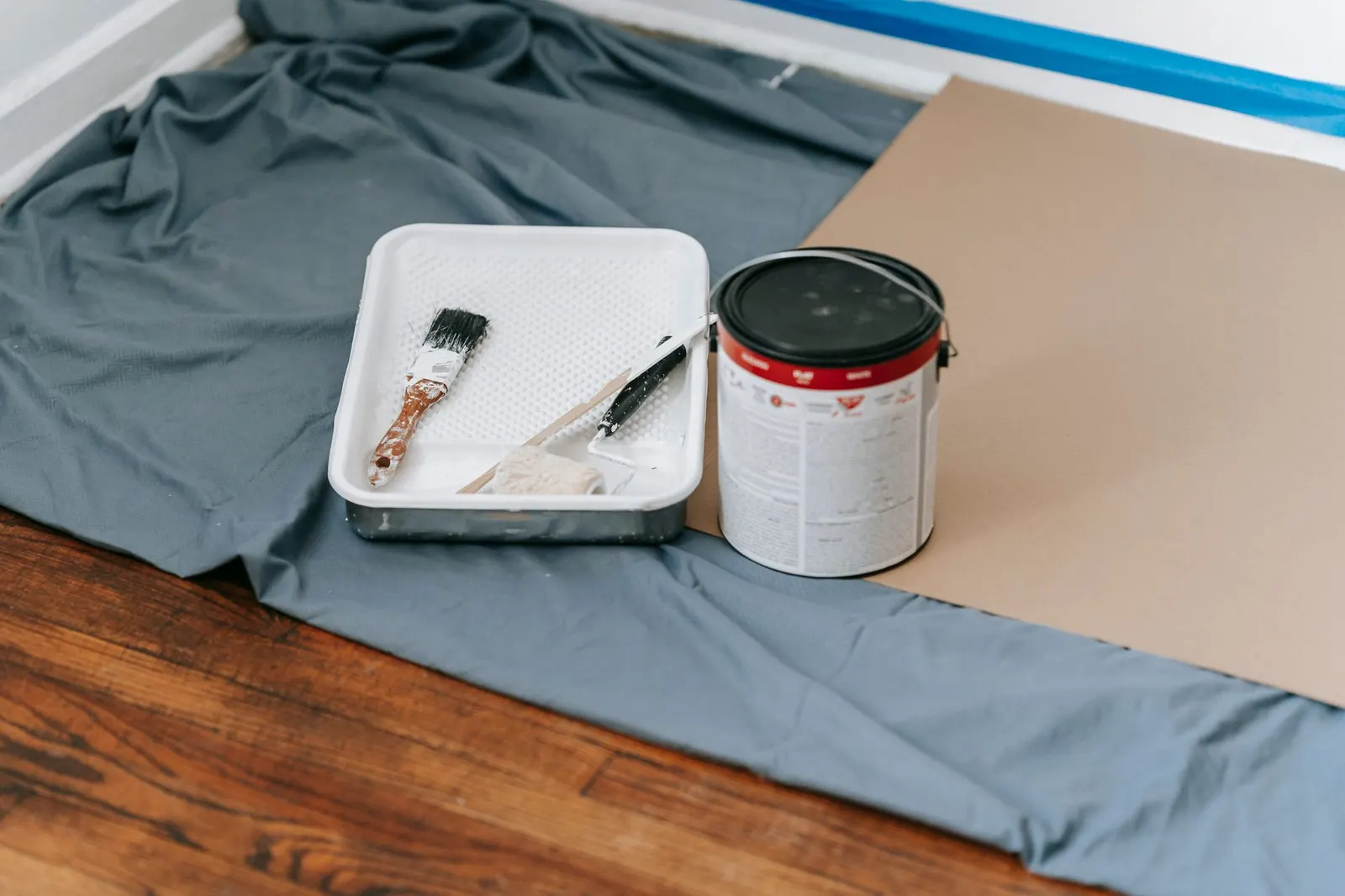
How to flip a thrifted wood nightstand with chalk-style paint and metallic wax hardware
Total time: about 6 hr
Materials
- Solid-wood nightstand or small side table
- Chalk-style furniture paint (1 quart)
- Clear water-based topcoat, matte or satin
- Degreasing cleaner
- Metallic wax paste in brass or gold
- Lint-free rags
Tools
- Screwdriver
- Scuff pad or fine sanding sponge
- 2-inch synthetic brush or foam brushes
- Painter's tape
- Drop cloth
- Disposable gloves
Check the piece before you pay
Pull every drawer, look for loose joints and wobble, and sniff for smoke or mildew. If the piece is already painted and might be older than 1978, treat the paint as possible lead paint and don't sand it.
Remove hardware and clean
Unscrew the knobs and bag them. Scrub the whole piece with a degreasing cleaner, rinse with a damp rag and let it dry fully. Grease and furniture polish are the usual reason paint peels.
Scuff the glossy spots
On an unpainted factory finish, rub the top and drawer fronts lightly with a scuff pad so the paint can grip. You are dulling the shine, not stripping it. Wipe away the dust with a damp rag.
Paint in thin coats
Brush on a thin first coat of chalk-style paint in the direction of the grain. Let it dry as the can directs, then add a second coat. Two thin coats look smoother and last longer than one thick one.
Seal the top
Brush on two thin coats of clear water-based topcoat, letting each dry per the label. Focus on the top, where cups and lamps sit. Wait for the full cure time on the can before you load it up.
Refresh the hardware
Wearing gloves, rub a tiny amount of metallic wax paste onto clean knobs with a fingertip or rag, then buff once it dries. Reattach the hardware and style the top with a lamp and one vase.
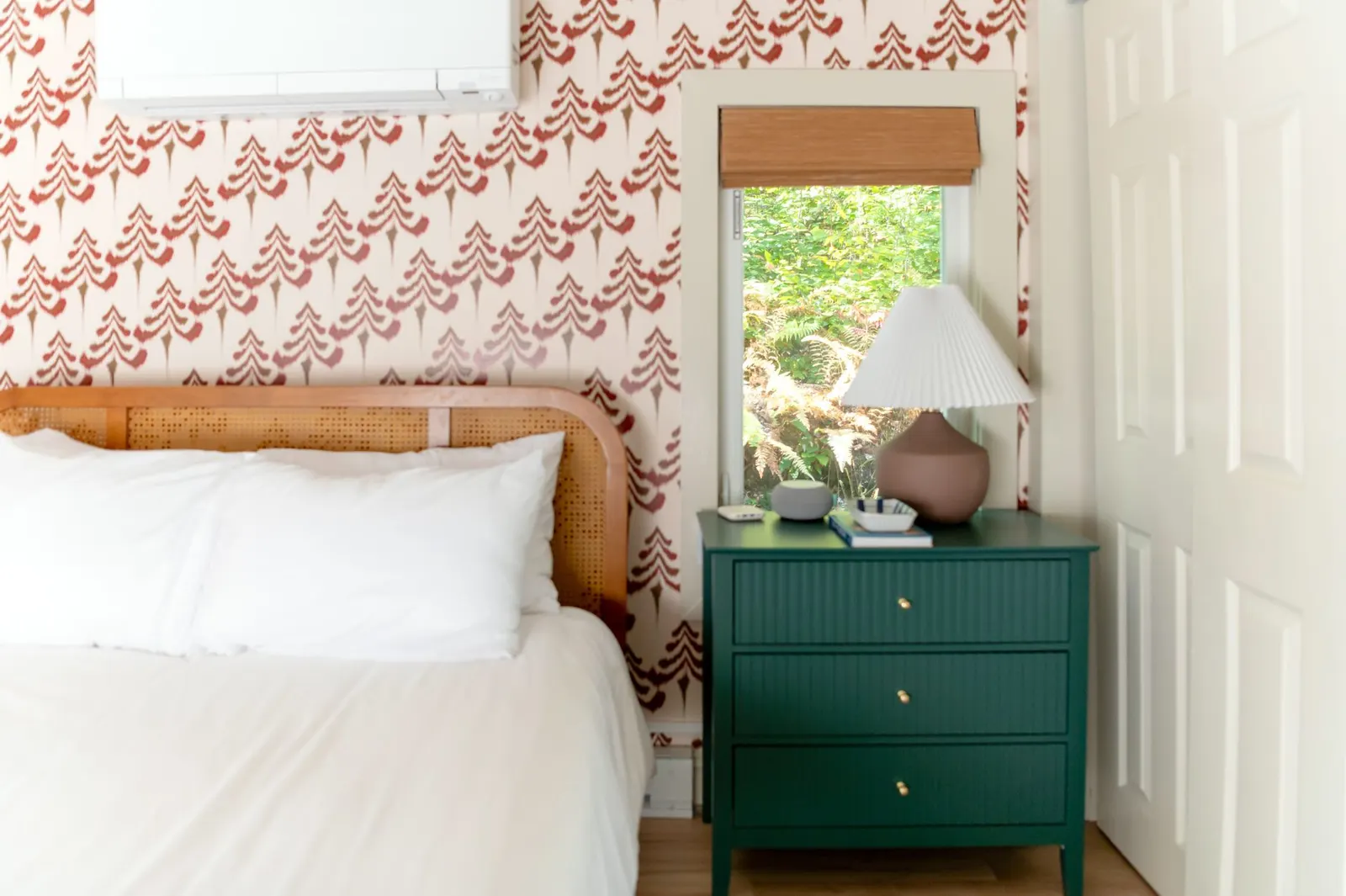
Trade-offs to know: chalk-style paint shows brush marks if you overload the brush, and an unsealed top will ring from a damp glass. Two thin topcoats and the full cure time on the can fix both.
Renter-Friendly Version
Almost everything in this guide is portable decor: you paint furniture you own, not the apartment. The only parts that touch the rental are hanging frames and mirrors.
Renters who want a bigger bedroom change without a headboard or holes can look at cheap headboard alternatives. For fabric projects with no sewing machine, no-sew skirted furniture and fringe DIYs turn thrifted side tables and lampshades into soft, grandmillennial pieces.
Common Mistakes
- Painting over grease. Kitchen and bedroom furniture carry years of polish and hand oils. Degrease first or the paint will peel at the edges.
- Skipping the topcoat on tabletops. Chalk-style paint stays soft. Seal anything that holds cups, keys or lamps.
- Buying for the color, not the shape. Color is the easiest thing to change. Proportions and material are not.
- Bringing upholstery home without a check. Inspect seams and joints with a flashlight first, per EPA's bed bug advice.
- Sanding old paint. If a painted piece might predate 1978, don't sand or strip it.
- Using too many small pieces. Group Dollar Tree decor in threes on a tray, or build one larger piece.
- Buying supplies for one project at a time. A quart of paint and a can of topcoat cover several pieces. Line up two or three flips in the same color.
Sustainability and Seasonal Projects
Secondhand decor keeps usable furniture out of the trash, and flipping it is one of the more practical ways to cut what you buy new. The Earth Day thrift flip challenge turns one store trip into five upcycles if you want a structured project.
Dollar Tree is strongest for seasonal pieces you'll swap out: fall stems, holiday candle holders, table runners and vase fillers. Buy neutral bases (clear glass, plain wood, white ceramic) that work in every season, then change the fillers. Store them in labeled bins so next year's version costs only the new fillers.

Where to Go Next
Use this page as the hub for the rest of the DIY and thrift series:
- Painting furniture: paint furniture without sanding
- Shopping thrift: what to buy and skip at the thrift store
- Buying used furniture online: Facebook Marketplace furniture guide
- Dollar Tree projects: Dollar Tree decor hacks
- Look-for-less: Pottery Barn dupes
- Walls and bedrooms: cheap wall art ideas and cheap headboard alternatives
- Trends from thrift finds: neo deco, cabbagecore and skirted furniture
Start with one plain Dollar Tree project and one thrifted piece of solid wood. Once you've done a vase and a nightstand, you know the five techniques, you own the tool kit, and every project after that costs a fraction of the first.
Frequently asked questions
What can you make with Dollar Tree items for home decor?
Good starting points are textured faux-stone vases, matte candle holders, gold-rimmed mirror trays, beaded wood trays and matching frame gallery walls. Plain shapes such as glass vases, round mirrors, frames and wood plaques take paint well. Skip pieces with printed sayings, thin plastic gold trim or obvious seams.
Is everything at Dollar Tree $1.25 now?
No. Most items are $1.25, and stores with the multi-price assortment also carry items at higher price points, commonly $1.50 to $5. Dollar Tree reported about 6,600 multi-price stores in August 2026, so check the shelf tag before you plan a project around one price.
What should you not buy at a thrift store?
Skip used cribs, bassinets and car seats, and be careful with upholstered furniture and mattresses. CPSC warns that used nursery products have been the subject of recalls, and EPA advises checking secondhand furniture and couches for bed bugs before bringing them home. Pass on particleboard that has swelled or split.
How do you tell if thrift store furniture is solid wood?
Look at the edges and the underside. Solid wood shows end grain that continues around corners, while veneer over particleboard shows a thin layer and a crumbly core. Solid pieces feel heavy for their size, and drawers often have dovetail joints instead of staples.
Can you paint thrifted furniture without sanding?
Usually, yes. Clean off grease, scuff glossy areas lightly, and use a chalk-style paint or a bonding primer, then seal with a clear topcoat. The exception is old paint that may contain lead: EPA advises against sanding it, so don't scuff a painted piece that might predate 1978.
Is it cheaper to DIY decor or buy it?
For small decor and solid furniture, DIY is often cheaper if you already own basic tools. A thrifted nightstand plus paint, topcoat and hardware finish runs about $50 to $133 the first time, versus roughly $299 and up new from a premium catalog retailer. It stops paying off once you add your hours or need to buy many tools.
By [Author Name]. Prices are approximate as of October 2026. How we work.
Sources (9)
- Dollar Tree, Inc. Reports Second Quarter Results (Form 8-K, Exhibit 99.1), Dollar Tree, Inc. via US SEC (2026-08-27)
- Protecting Your Home from Bed Bugs, US EPA (2026-07-06)
- Protect Your Family from Sources of Lead, US EPA (2026-10-05)
- 16 CFR Part 1303: Ban of Lead-Containing Paint and Certain Consumer Products Bearing Lead-Containing Paint, US Government Publishing Office (CPSC regulation) (2015-01-01)
- Resale / Thrift Stores, US Consumer Product Safety Commission (accessed 2026-10-23)
- Used Car Seat Safety Checklist, NHTSA (accessed 2026-10-23)
- Krylon FAQs (ventilation, conditions, dry times), Krylon (Sherwin-Williams) (accessed 2026-10-23)
- Pottery Barn Nightstands buying guide, Livingetc (undated; accessed 2026-10-23)
- Candle Fire Safety, US Fire Administration (FEMA) (2023-04-01)
Image credits: Photo: LayG Traveller · Pexels · Pexels License; Photo: RDNE Stock project · Pexels · Pexels License; Photo: Joel Zar · Pexels · Pexels License; Photo: Blue Bird · Pexels · Pexels License; Photo: Andrea Davis · Pexels · Pexels License; Photo: Sóc Năng Động · Pexels · Pexels License.