Protect Thrifted Wood Furniture From Dry Winter Air
Stop dry air damage to wood furniture this winter: the right humidity, a $25 hygrometer kit, humidifier care and what to check on thrifted pieces.
Under $50 · Renter-safe · Easy · 1 hour to set up, 5 minutes a dayUpdated

In this post
Dry air damage to wood furniture is real, and winter is when it shows up. Heat runs for months, indoor humidity drops, and wood quietly gives up moisture. The result is a drawer that rattles, a chair rung that wiggles, or a hairline crack across the end of a thrifted tabletop.
The fix is cheap. A $10 hygrometer tells you whether your air is actually too dry.
A small humidifier, used with care, brings it back into a safe range. Moving a dresser off the heat vent costs nothing at all.
This guide is part of our guide to decorating for your climate, which covers dry, humid, sunny and coastal regions. Here we focus on cold winters and the wood you've rescued from thrift stores and curbs.
Why Wood Furniture Cracks in Winter
Wood trades moisture with the air around it all the time. Purdue Extension's furniture bulletin puts it plainly: in humid air wood absorbs moisture and swells, and in dry air it loses moisture and shrinks. Finishes slow that exchange, but in general they don't stop it.
Winter heating pushes that process hard. Purdue's lumber bulletin notes that a heated house in winter, with no real humidification, can drop to 20% relative humidity or less. After a winter of heating, "cracks can develop in wood floors, and furniture joints can open."
The numbers behind the cracks
Wood settles at a moisture level that matches the air, called equilibrium moisture content (EMC). Purdue's table at 70°F shows how far it swings:
- At 20% humidity, wood settles around 4.5% moisture content.
- At 35% humidity, about 6.9%, which Purdue calls typical of comfortable homes and offices.
- At 50% humidity, about 9.2%.
- At 80°F and 80% humidity (a sticky summer day), it moves toward 15.7%.
A few points of moisture is plenty to move a piece. In Purdue's worked example, a 32-inch-wide sugar maple tabletop changes about 0.63 inch in width with a 6-point moisture swing. The wood moves most across the grain and barely at all along it, which is why tops split at the ends and side to side, not lengthwise.
What the damage looks like
Purdue's furniture bulletin lists the usual suspects:
- Open joints. Miter corners on cabinet doors and tables gap as the wood shrinks.
- Loose legs and fasteners. As a leg shrinks, screws and anchor bolts end up holding less wood, and the leg turns wobbly.
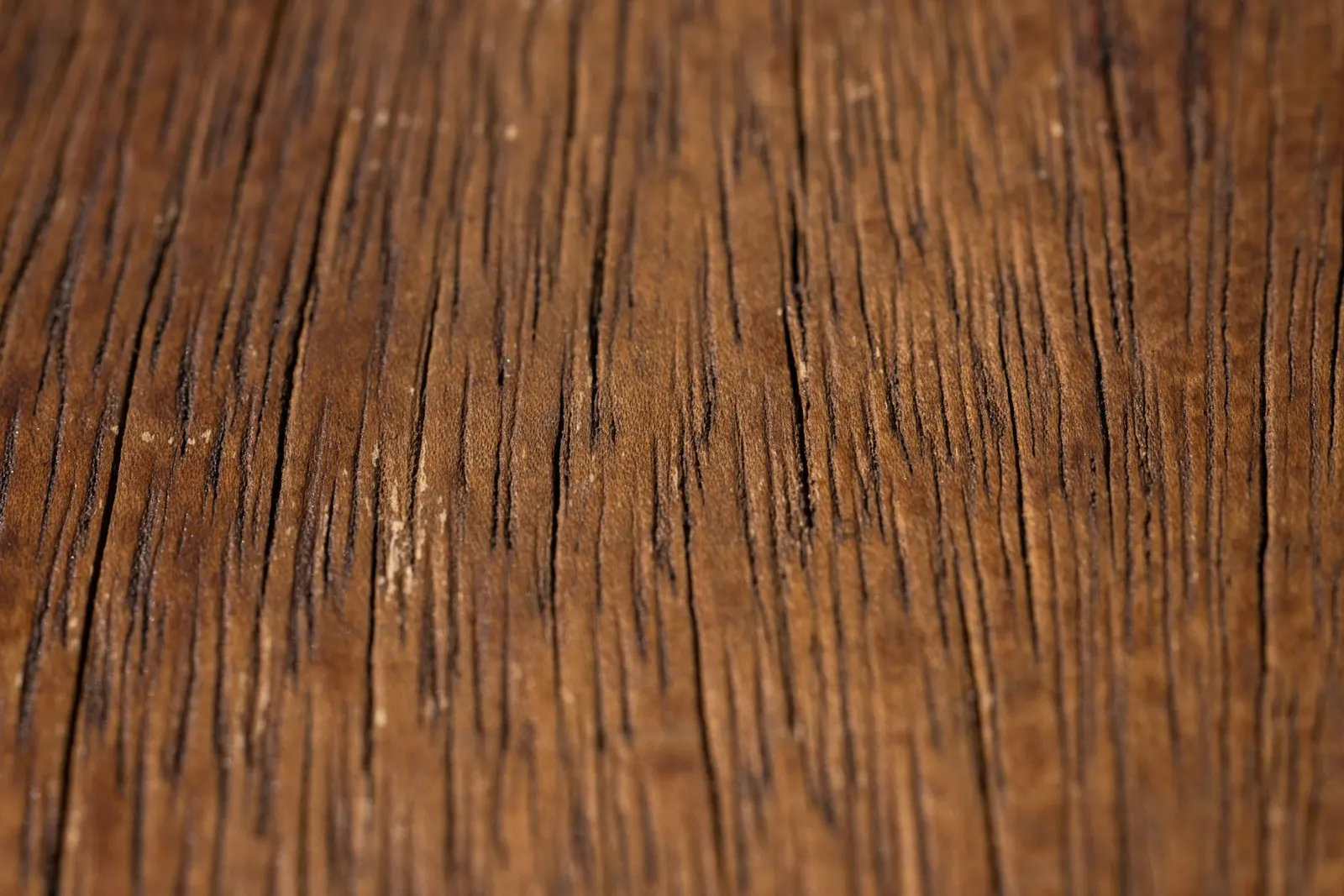
- End splits on tabletops. End grain loses moisture 16 to 20 times faster than side grain, so the ends try to shrink before the middle can.
- Loose chair rungs and spindles. Round holes and the dowels in them change shape as they dry.
- Checks in veneer and finish. Purdue's lumber bulletin adds that thin veneer reacts faster to humidity changes than thick stock.
Purdue also notes that furniture in northern cities such as Chicago should be expected to dry to 5% moisture content or less at some point in the year. If you live in the Northeast, Midwest or Mountain West, assume your wood pieces are feeling it.
Measure First: Get a Hygrometer
Don't guess. A digital hygrometer costs about $8 to $12 and shows humidity and temperature at a glance. Purdue's lumber bulletin points out that relatively inexpensive temperature and humidity monitors are sold at building supply stores and work well for this job.
Purdue adds two practical notes: check a new unit against a known standard if you can, and keep a fresh battery in it, because a weak battery can give wrong readings.
Where to put it
- Put it in the room with your best wood piece, at about tabletop height.
- Keep it away from the humidifier, the kitchen, the bathroom door and heat vents. Those spots read high or low.
- Check it morning and evening for a week before you buy anything else. You might find your air is fine.
What the readings mean
| Reading | What to do |
|---|---|
| Below 30% | Add a small humidifier in the room with your wood furniture |
| 30–50% | You're in EPA's ideal range. Leave it alone |
| 50–60% | Turn the humidifier down or off. Watch the windows |
| Above 60% | Too humid. EPA advises staying below 60% to limit mold |
Using a Humidifier Without Hurting Your Wood (or Your Walls)
A humidifier is the tool that actually raises the moisture in the air. Used carelessly, it trades one problem for another: wet windowsills, mold and dust. EPA's guidance on home humidifiers keeps it simple.
Set a ceiling
EPA's mold guide recommends keeping indoor humidity below 60%, ideally between 30% and 50%. Its humidifier page is stricter: don't humidify above 50%.
For wood furniture, the low-to-middle part of that band is plenty. Going from 20% to 40% humidity takes wood from about 4.5% to about 7.7% moisture content on Purdue's table. That's a big improvement, and you don't need to push higher.
If you see condensation on windows, walls or pipes, EPA says to dry the surface and reduce the moisture source. In a cold-climate winter, that usually means turning the humidifier down.
Keep it clean
EPA's humidifier care basics:
- Use water with low mineral content, such as distilled water, so the unit doesn't release minerals into the air.
- Empty the tank, wipe surfaces dry and refill daily for portable units.
- Clean portable humidifiers every third day to cut down on scale and microorganisms.
- Don't let the area around the humidifier get damp or wet.
- If a fine white dust appears on furniture, that's a sign of minerals in the water. Switch to distilled water.
Follow your humidifier's manual for the cleaning solution and steps, since designs differ.
Placement that protects furniture
- Keep the humidifier a few feet from wood pieces, and never aim the mist at a dresser, bookcase or piano.
- Set it on a tray or a waterproof mat, not directly on a wood surface.
- Keep it away from windows, where extra moisture turns into condensation fastest.
Move Wood Away From Heat and Sun
This step is free. Direct heat dries one side of a piece faster than the other, and uneven drying is what pulls joints apart.
- Clear the heat source. DOE's Energy Saver guide says to keep warm-air registers, baseboard heaters and radiators clear of furniture, carpeting and drapes. Your wood benefits, and so does your heating bill.
- Leave a gap. Pull wood pieces several inches off radiators and baseboard heaters. A dresser pressed against a hot radiator is drying out one side while the other stays cooler.
- Watch the sun. A south-facing window in winter is great for warmth and light, but a wood tabletop in that beam all afternoon heats and dries unevenly. Shift it a few feet or drape a runner across it during the sunniest hours.
If moving furniture leaves you with an awkward layout, our guide on how to keep your apartment warm in winter covers rugs, curtains and draft fixes that work around vents. And if the sunny spot is the only bright corner you have, borrow ideas from making a dark apartment brighter so the wood can live somewhere else.
Bringing Home a Thrifted Wood Piece in Winter
Secondhand wood is often stored in garages, sheds, basements or storage units before it reaches you. Purdue's furniture bulletin describes exactly what can happen next: antique tables stored in unheated areas can sit at 12% moisture content or more, and once they come into a centrally heated home, the ends start drying before the core. That stress is what splits the ends of tabletops.
Let it acclimate
- Put the new piece in a cooler room first, away from vents and radiators, for its first couple of weeks.
- Leave drawers and doors closed. You're aiming for slow, even drying.
- Hold off on refinishing, painting or gluing until it has settled. A joint glued while the wood is still drying can open again. When it's ready, our guide to how to paint furniture without sanding walks through the finish step.
What to check before you buy
Bring a flashlight and look closely. The thrift store decor guide covers what's worth buying in general. For wood, check:
- Tabletop ends. Look for splits running in from the end grain. A short check is common. A long open crack is a repair job.
- Joints. Push gently on chair backs and table legs. A little play can tighten up as humidity rises. Real wobble needs glue.
- Veneer. Run your fingers along edges and corners. Lifted, bubbled or chipped veneer is fixable but takes patience.
- Drawers. Open every one. Sticking can mean swelling from damp storage. Loose fronts can mean dried-out glue.
- The smell. A musty smell suggests damp storage and possibly mold, which ties into the same humidity rules.
Buying from a stranger online? Our Facebook Marketplace furniture guide covers inspection and safety at pickup.
Everyday Care: Coasters, Pads and Finish
These habits protect the finish. They don't stop shrinking.
- Use coasters and trivets. A dry finish is still a finish, and water rings and heat marks are the most visible damage on a thrifted table.
- Add felt pads under lamps, vases and plant pots so nothing scratches or traps moisture against the wood.
- Dust with a barely damp microfiber cloth, then dry it right away.
- Skip the oil-as-moisturizer idea. Polish can make a finish look richer, but Purdue notes finishes only slow moisture exchange. Room humidity is what controls shrinking.
Fixing a Loose Joint (Owners)
If a chair rung or table leg has worked loose, start by bringing the room into the 30–50% range and waiting a couple of weeks. Wood swells as it regains moisture, so some joints tighten on their own.
If it's still loose:
- Gently work the joint apart only if it comes easily. Forcing it can crack the wood.
- Scrape or sand out the old glue so new glue can grip clean wood.
- Apply wood glue, reassemble, and clamp or strap it, following the glue's label for clamp and cure times.
- Wipe away squeeze-out with a damp cloth before it dries.
For loose screws in a table leg, tightening them may be all it takes, since the wood around them has shrunk. For valuable antiques, veneer repair or a long split across a top, ask a furniture restorer before you reach for glue.
Guitars, Frames and Other Wood You Love
Furniture isn't the only wood that reacts to dry air. Taylor Guitars says that an acoustic guitar kept outside 45–55% relative humidity is in danger of cracking, and it recommends a guitar humidifier plus a digital hygrometer.
That range sits above EPA's 30–50% ideal for a home, so don't humidify the whole room to match it. Keep the guitar in its case, which Taylor notes protects it from many humidity changes, and humidify inside the case instead.
As practical advice, treat wood picture frames, bowls and carved decor the same way: off the radiator and out of direct heat.
What It Costs
Start with the $25 kit. Add the humidifier only if your hygrometer reads below 30%.
Budget breakdown: The $25 starter kit (measure and protect)
$13.50–$28
| Item | Price range | Where to buy |
|---|---|---|
| Digital indoor hygrometer (humidity and temperature monitor) | $8–$12 | Walmart, Amazon, Target, Home Depot |
| Felt furniture pads (multi-size pack) | $3–$6 | Dollar Tree, Walmart, Home Depot |
| Coasters (set of 4, cork, stone or wood) | $1.25–$5 | Dollar Tree, thrift stores, Target |
| Microfiber cloths (multi-pack) | $1.25–$5 | Dollar Tree, Walmart |
| Total | $13.50–$28 |
Prices are approximate as of October 2026 and vary by store and region. Prices are approximate as of October 2026 and vary by store, size and region.
Budget breakdown: The $60 plan (starter kit plus a humidifier)
$39.50–$75
| Item | Price range | Where to buy |
|---|---|---|
| Everything in the $25 kit | $13.50–$28 | See above |
| Small cool-mist room humidifier (bedroom or living-room size) | $25–$45 | Walmart, Target, Amazon |
| Distilled water (1 gallon, buy as needed) | $1–$2 | Walmart, grocery stores |
| Wood glue for a loose joint (owners only)(optional) | $4–$8 | Home Depot, Lowe's, Walmart |
| Total (without optional) | $39.50–$75 |
Prices are approximate as of October 2026 and vary by store and region. Prices are approximate as of October 2026 and vary by store, size and region.
Renter-Friendly Version
Common Mistakes
- Running the humidifier on high all winter. EPA advises not humidifying above 50%, and too much moisture shows up as sweating windows.
- Using tap water in hard-water areas. It leaves white mineral dust on every surface, including your dark wood.
- Skipping the cleaning schedule. EPA says to empty, dry and refill portable units daily and clean them every third day.
- Gluing a joint in the driest week of the year. Raise humidity first. The joint may close up by itself.
- Parking a thrift find on the heat register. Fresh from a cold garage, it's the piece most likely to split.
Measure first, adjust slowly, and save the glue for whatever is still loose in a couple of weeks.
Frequently asked questions
Does dry air damage wood furniture?
It can. Purdue Extension explains that wood loses moisture and shrinks in dry air. A heated home in winter can drop to 20% relative humidity or less, and after a heating season cracks can develop in wood floors and furniture joints can open. Finishes slow the process but do not stop it.
What humidity is best for wood furniture in winter?
Aim for EPA's healthy-home range of 30% to 50% and keep it below 60%. Inside that band, Purdue's moisture table shows wood settling around 6% to 9% moisture content at 70°F, close to the 6–8% that furniture lumber is typically dried to. Steady matters more than perfect.
Can a humidifier damage wood furniture?
Yes, if it runs too high or sits too close. EPA advises not humidifying above 50% and not letting the area around the unit get damp. Keep the humidifier a few feet from wood pieces, never aim the mist at them, and watch for condensation on windows as a sign to turn it down.
How do I stop wood furniture from cracking in winter?
Measure humidity with a hygrometer, bring a very dry room up toward 30–50% with a clean room humidifier, and move wood pieces away from radiators, heat registers and sunny windows. Bring cold-stored thrift finds indoors gradually rather than straight next to a heat source.
Will cracks in wood furniture close up in summer?
Joints that opened from shrinking often tighten again when humidity rises, because wood swells as it regains moisture. A true split in a tabletop usually does not fully close. Stabilize humidity first, then decide whether the piece needs glue or a repair.
Should I oil my wood furniture to keep it from drying out?
Polish and oil help the finish look good, but they don't put water back into the wood. Purdue notes that finishes only slow moisture exchange with the air. Room humidity is what controls shrinking, so a hygrometer does more for a dresser than another coat of oil.
By [Author Name]. Prices are approximate as of October 2026. How we work.
Sources (6)
- The Shrinking and Swelling of Wood and Its Effect on Furniture (FNR-163), Carl A. Eckelman, Purdue Extension (undated; accessed 2026-10-23)
- Controlling Moisture Content in Stored Lumber (FNR-403-W), Daniel L. Cassens, Purdue Extension (2008-06)
- A Brief Guide to Mold, Moisture and Your Home, US EPA (2026-02-18)
- Use and Care of Home Humidifiers, US EPA (2026-04-29)
- Energy Saver: Tips on Saving Money and Energy in Your Home, US Department of Energy (2022-08)
- Symptoms of a Dry Guitar, Taylor Guitars (undated; accessed 2026-10-23)
Image credits: Photo: cottonbro studio · Pexels · Pexels License; Photo: Engin Akyurt · Pexels · Pexels License; Photo: Burst · Pexels · Pexels License; Photo: Valentin Ivantsov · Pexels · Pexels License; Photo: Max Vakhtbovych · Pexels · Pexels License.