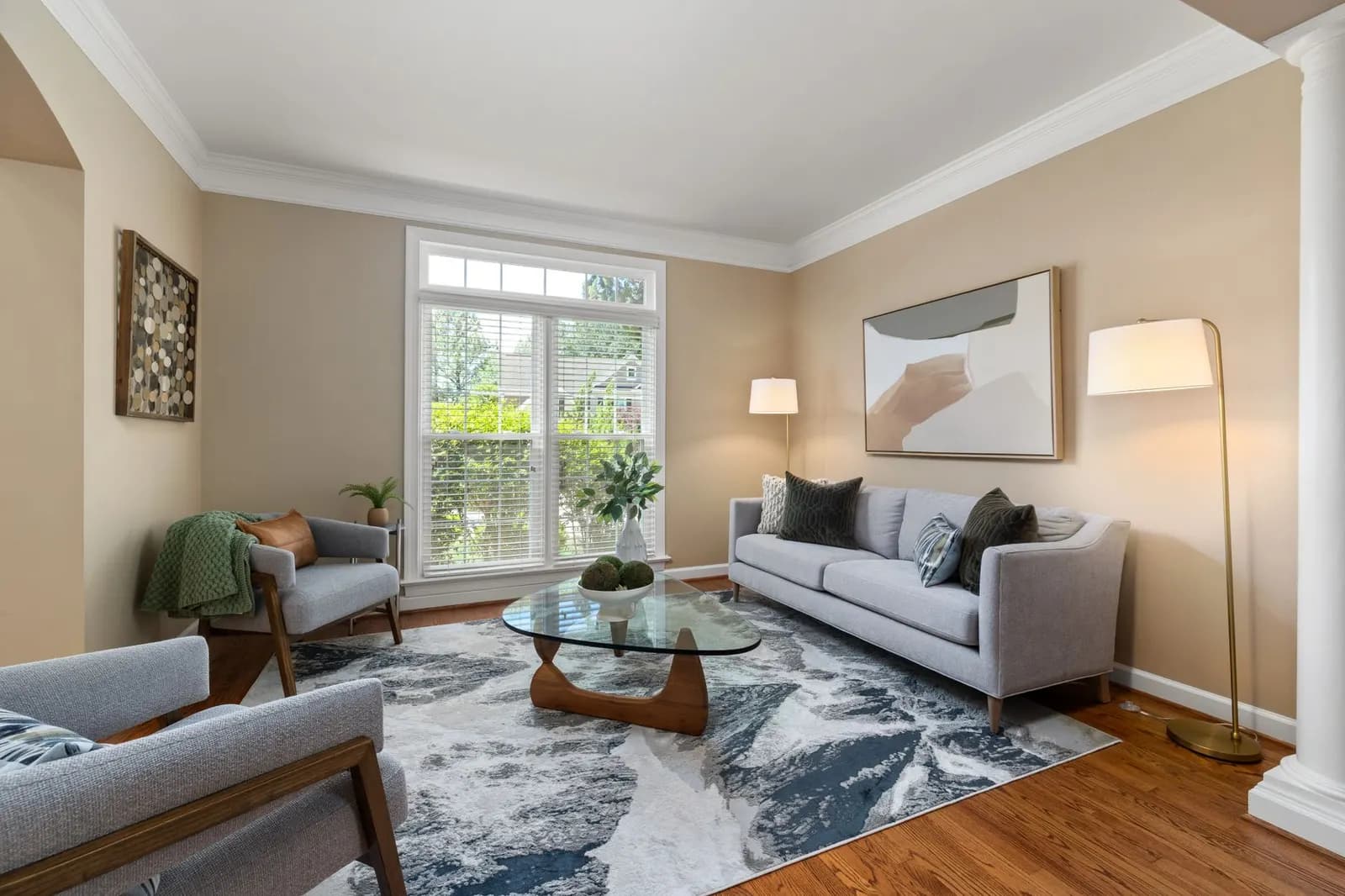
How to Keep Your Apartment Warm: Renter Decor Fixes
How to keep your apartment warm in winter with renter-safe decor: thermal curtains, draft stoppers, rugs, window film and safe space heater habits.
- Budget
- Under $50
- Renter-safe
- Yes, reversible
- Difficulty
- Easy
- Time
- 1 afternoon
In this post
Part of our guide: Decorating for Your Climate: A Region-by-Region Guide
If you want to know how to keep your apartment warm in winter without touching the thermostat or the walls, start with the cold air sneaking in, then work on what holds heat in. Most of the fixes are fabric: curtains, rugs, draft stoppers and blankets.
A $25 starter kit seals the worst door draft. About $50 adds window film. Around $100 gets you lined curtains and a rug too. Everything here comes off in spring without a trace if you follow the removal notes.
These fixes fit into the bigger picture in our guide to decorating for your climate, which covers cold, dry, humid and sunny regions.
Start With Drafts: The Cheapest Heat You'll Get
Cold air leaks in around doors and window sashes, and warm air leaks out. DOE estimates that caulking, sealing and weatherstripping air leaks can save 10–20% on heating and cooling bills. Renters can do a reversible version of all three.
Find the leaks
On a windy day, hold the back of your hand near the bottom of the entry door, window edges and outlet covers on exterior walls. A cold stream means a leak. A lit incense stick works too, as long as you keep it away from curtains and never leave it burning.
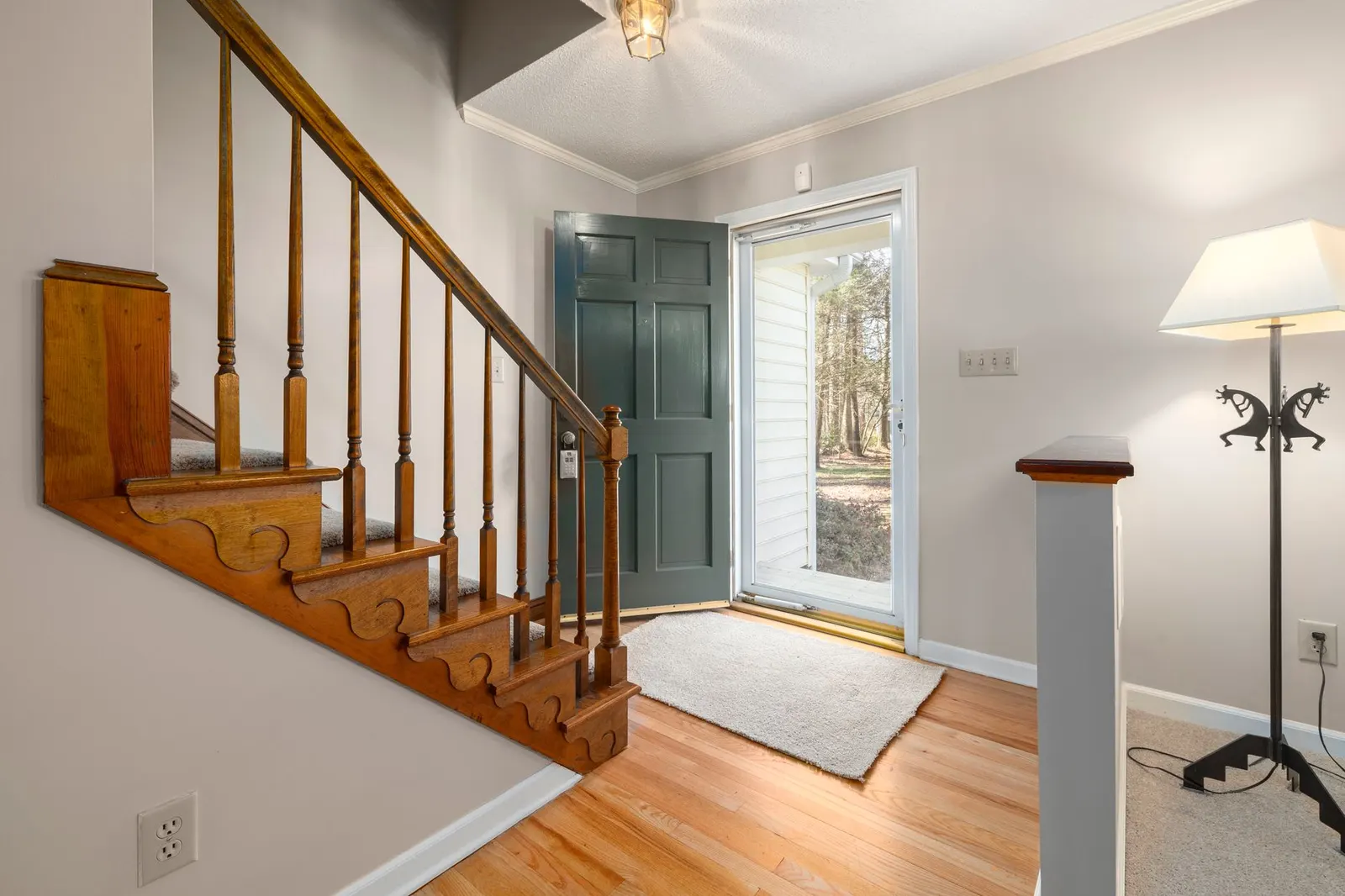
Draft stoppers for doors
A fabric tube along the bottom of the door blocks the most obvious gap. Ready-made ones run about $10–$25 at Walmart and Amazon. The no-sew version below costs less if you use fabric you already own.
For a door you open constantly, a twin draft guard (two foam tubes joined by fabric that slides under the door) stays attached as the door swings. Measure your door's thickness before you buy.
Removable weatherstripping
Foam tape and V-strip weatherstripping stick into the door frame or window sash where the door or window closes. Most hold with adhesive, which can pull paint when you remove it.
Removable rope caulk is the most renter-friendly option for window gaps. You press it into place with your fingers and peel it out in spring.
Make a No-Sew Draft Stopper
This takes about 45 minutes and no sewing machine. Fleece and flannel are the easiest fabrics because the cut edges barely fray. An old pair of jeans works too: cut off the legs, close one end, stuff, and join two legs if your door is wide.
How to make a no-sew draft stopper
Total time: about 45 min
Materials
- Fabric about 9 in wide and 4 in longer than your door (fleece, flannel, old jeans legs or a thrifted throw)
- Iron-on hem tape or fabric glue
- Filler: rolled old towels, polyester fiberfill or plastic poly-pellets
- Two rubber bands or ribbon ties
Tools
- Tape measure
- Fabric scissors
- Iron (if using hem tape)
Measure the gap
Measure the width of the door from hinge side to latch side. Add 4 inches so the stopper overlaps the frame and the ends have room to tie off.
Cut the fabric
Cut a rectangle about 9 inches tall by your door width plus 4 inches. Fleece and flannel are forgiving because they do not fray much.
Bond the long seam
Fold the fabric in half lengthwise, right sides out. Lay iron-on hem tape along the open edge and press it with a hot iron, or run a thin bead of fabric glue and weigh it down until it sets.
Fill the tube
Gather one end and close it with a rubber band or ribbon. Stuff in rolled towels or fiberfill until the tube is firm but still bendable. Add a cup of poly-pellets at the bottom for weight if the door is drafty.
Close and place
Tie off the second end. Lay the stopper tight against the bottom of the door on the inside. For a door you use often, push it aside with your foot and replace it after you close the door.
Skip dry rice or beans as filler in a stopper that sits by an exterior door. If it gets damp from snow tracked inside, it can sour. Plastic poly-pellets from the craft aisle add weight without that risk.
Windows: Curtains, Shades and Film
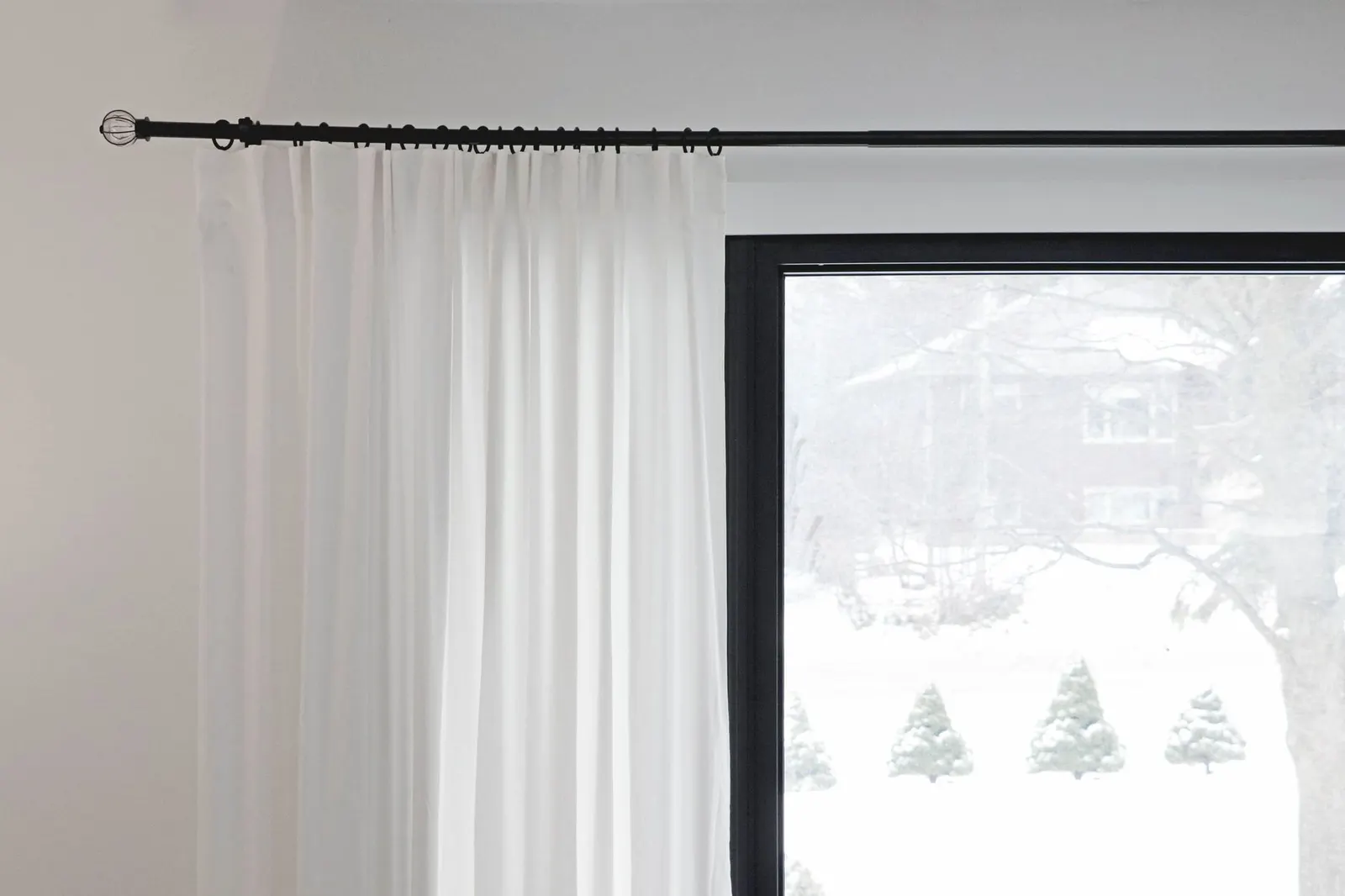
Windows are usually the coldest surface in the room. DOE's winter advice is simple: open drapes and shades on south-facing windows during the day to let sunlight in, then close them at night to cut the chill from cold windows.
Thermal or lined curtains
A thermal or lined panel traps a layer of air between the fabric and the glass. To get the most from it:
- Hang the rod 4–6 inches wider than the frame on each side so the panels cover the edges.
- Let the hem fall to the sill or floor. Gaps at the bottom let cold air pour out.
- Choose a pair that covers about twice the window's width when closed, so the fabric folds instead of stretching flat.
If you can't drill, a tension rod inside the frame or a no-drill bracket works. See our no-drill curtain and blind options.
Cellular (honeycomb) shades
Cellular shades have pockets of trapped air, which is why they insulate better than most blinds. In tests at an Oak Ridge National Laboratory research house, DOE reports that "cellular shades saved up to 20% on heating energy and up to 15% on total energy from heating and cooling compared to [a] scenario without any shades" (DOE fact sheet). The same fact sheet says vinyl or metal blinds "do not provide much insulation."
Cordless cellular shades in stock sizes run about $25–$60 per window at Home Depot and Lowe's. Most mount with two small screws, so ask your landlord first, or look for tension-mount versions. Our comparison of thermal curtains vs. cellular shades goes deeper on which one to pick.
Window insulation film
Shrink-film kits put a clear plastic layer over the window frame, creating an air gap. You stick double-sided tape on the trim, press the film on, and tighten it with a hair dryer. One kit (about $8–$15) usually covers several windows.
The trade-off: the film is visible up close, you can't open the window until spring, and the tape may take paint with it on old trim. It's best on windows you never open in winter.
Floors, Fans and Heat Flow
Rugs on cold floors
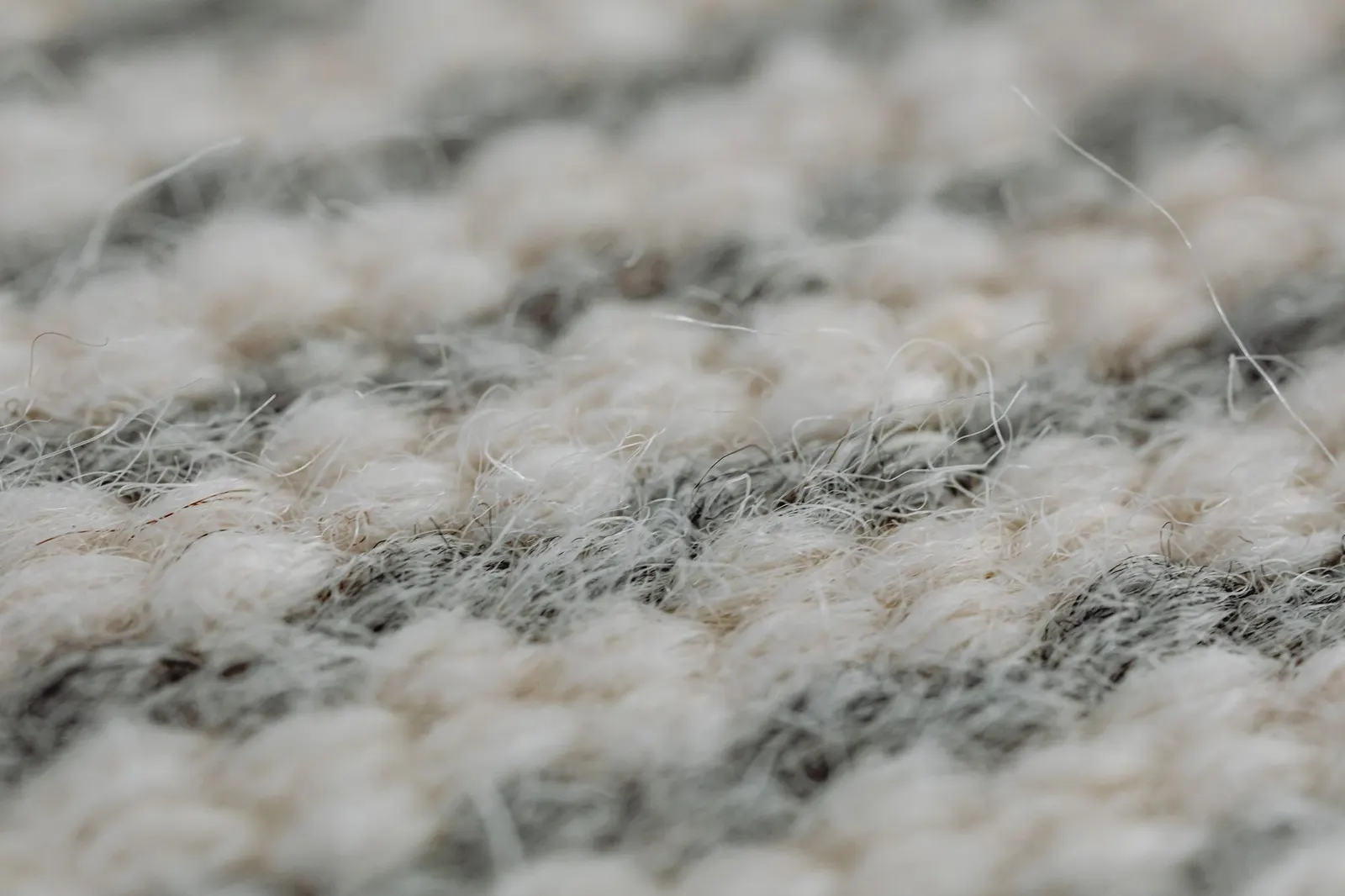
Hard floors over unheated space, such as a ground-floor slab or a unit over a garage, feel cold underfoot. A rug won't heat the room, but it makes the floor you touch feel warmer. Wool and wool-blend rugs are a good pick for warmth underfoot. A thick rug pad under a thinner flat-weave adds cushion and warmth for less.
Thrifted wool rugs and Facebook Marketplace finds are the best value. A new washable 5 x 7 ft rug runs about $40–$100 at Walmart and IKEA.
Ceiling fan clockwise on low
Warm air rises and collects near the ceiling. ENERGY STAR says to run your ceiling fan clockwise on low speed in winter to push that warm air gently back down. Most fans have a small direction switch on the motor housing. Turn the fan off when you leave the room, as DOE recommends.
Keep heat sources clear
DOE says to keep registers, baseboard heaters and radiators clear of furniture, carpeting and drapes. A sofa pushed against a baseboard heater or a long curtain draped over a radiator traps the heat it should be sending into the room.
Pull the sofa out 6–12 inches. Tie back or shorten curtains that hang over a radiator. If you lay a rug, make sure it doesn't cover a floor register. Before you blame the heat, check what's sitting in front of it.
Layer the Places You Sit and Sleep
This is where decor does the most for comfort. Instead of heating the whole apartment, warm the spots you use.
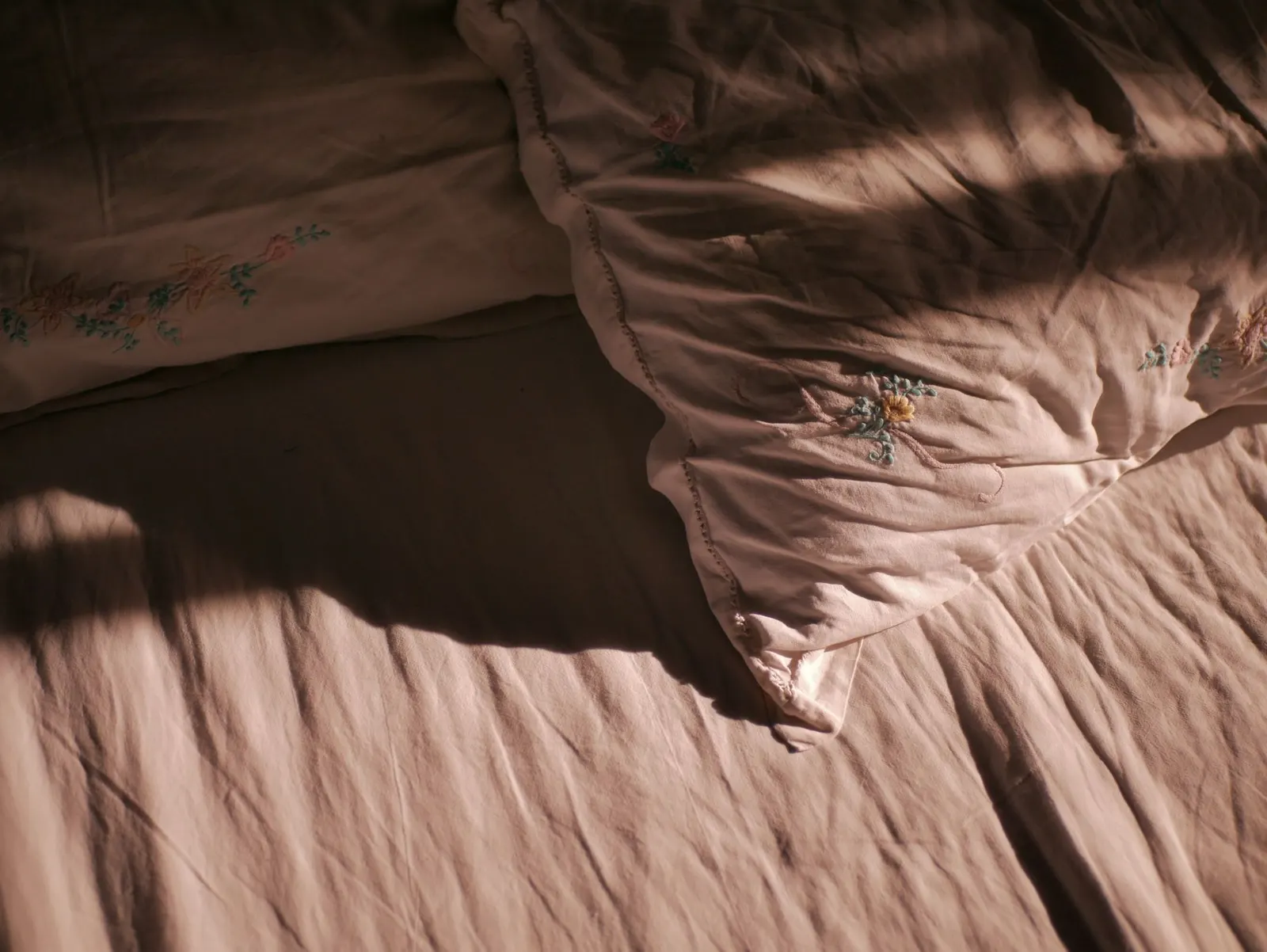
- Bed: flannel sheets, a wool or fleece blanket under the comforter, and a quilt on top. Several layers let you add or remove warmth through the night.
- Headboard wall: if the bed sits against an exterior wall, a fabric headboard or a tapestry hung with removable hooks keeps the cold wall from radiating chill at night.
- Sofa: one heavy throw and one lighter one, so you can adjust. Keep a basket of extras within reach.
- Reading chair: move it away from the window and out of any draft path.
If short, gray days are the bigger problem, pair these with the lighting ideas in our guide to brightening a gray winter apartment.
Space Heater Safety
A space heater can warm one room cheaply, but it needs rules. The US Fire Administration says to:
- Keep anything that can burn at least 3 feet away. That includes curtains, throws, bedding, floor poufs and holiday garlands.
- Turn heaters off when you leave the room or go to bed.
- Plug the heater directly into a wall outlet, not an extension cord or power strip.
- Set it on a solid, flat surface and check the cord and plug for damage.
- Never use your oven to heat your home.
USFA also notes that portable heaters were only 3% of home heating fires but 41% of fatal home heating fires (2017–2019). That's why the 3-foot zone matters when you style a cozy corner.
Don't Forget Humidity
Winter air indoors is often dry, which can make a room feel colder and dry out skin and wood furniture. A small humidifier helps, but more isn't better.
EPA recommends keeping indoor humidity below 60%, ideally 30–50%. Above that, moisture condenses on cold window glass, which can lead to mold on sills and curtain hems. An $8–$12 hygrometer tells you where you stand. If you see condensation, dry the surface, turn the humidifier down, and open curtains during the day so the glass can warm up.
Dry air is hard on wood, too. Our guide to protecting wood furniture from dry winter air covers placement and humidity in more detail.
Common Mistakes
- Blocking the heat. Sofas against baseboard heaters and drapes over radiators trap heat.
- Curtains that stop short. A panel that ends 6 inches above the sill lets cold air spill into the room.
- Leaving curtains closed all day. On sunny days, south-facing windows bring in free heat.
- Overdoing the humidifier. Wet window glass means the air is too humid.
- Styling into the 3-foot zone. A throw draped near a space heater is a fire risk.
- Sticking adhesive on fragile paint without testing first.
Splurge vs. Save
| Item | Save | Splurge |
|---|---|---|
| Window insulation | Shrink-film kit, $8–$15 (Home Depot, Lowe's) | Cordless cellular shades, $25–$60 per window (Home Depot, Lowe's) |
| Door draft | No-sew stopper from scrap fleece, $0–$10 | Twin under-door draft guard, $15–$30 (Amazon, Walmart) |
| Warm floor | Thrifted wool rug, $15–$60 (thrift stores, Facebook Marketplace) | New wool-blend 5 x 8 ft rug, $200–$400 (Target, West Elm) |
| Bedding | Thrifted wool blanket, $8–$25 | Flannel sheet set plus wool throw, $60–$150 (Target, L.L.Bean) |
No-Tools Version
No iron, no drill, no ladder? You can still do most of this:
- Roll a bath towel tightly, tie it with ribbon, and lay it along the door.
- Press rope caulk into window gaps with your fingers.
- Hang lined curtains on a tension rod.
- Move furniture off heaters and vents.
- Flip the ceiling fan switch and layer the bed.
Your Budget
Prices are approximate as of October 2026.
Budget breakdown: The $25 starter plan
$18–$32
| Item | Price range | Where to buy |
|---|---|---|
| Fabric draft stopper for one exterior door (DIY or ready-made) | $5–$10 | DIY with Dollar Tree or thrift fabric; ready-made at Walmart, Amazon |
| Removable foam or V-strip weatherstripping (one door) | $5–$10 | Home Depot, Lowe's, Walmart |
| Indoor hygrometer (humidity monitor) | $8–$12 | Walmart, Amazon, Target |
| Total | $18–$32 |
Prices are approximate as of October 2026 and vary by store and region. Prices are approximate as of October 2026 and vary by store, size and region.
Budget breakdown: The $50 plan (starter plus windows)
$32–$57
| Item | Price range | Where to buy |
|---|---|---|
| Everything in the $25 plan | $18–$32 | See above |
| Window insulation film kit (shrink film, covers several windows) | $8–$15 | Home Depot, Lowe's, Walmart |
| Removable rope caulk for window gaps | $6–$10 | Home Depot, Lowe's |
| Total | $32–$57 |
Prices are approximate as of October 2026 and vary by store and region. Prices are approximate as of October 2026 and vary by store, size and region.
Budget breakdown: The $100 plan (starter, windows and textiles)
$65–$112
| Item | Price range | Where to buy |
|---|---|---|
| Everything in the $50 plan | $32–$57 | See above |
| Thermal or lined curtain panels (pair, one window) | $25–$40 | Walmart, Target, IKEA, Amazon |
| Thrifted wool blanket or flannel sheet set | $8–$15 | Thrift stores, Walmart, Target |
| Washable area rug or rug pad for a cold floor (used or on sale)(optional) | $15–$30 | Facebook Marketplace, thrift stores |
| Total (without optional) | $65–$112 |
Prices are approximate as of October 2026 and vary by store and region. Prices are approximate as of October 2026 and vary by store, size and region.
Want more ways to make a rental feel like home without losing your deposit? Start with our renter decorating guide.
Frequently asked questions
How can I keep my apartment warm without a heater?
Stop drafts first with a draft stopper and removable weatherstripping, then close lined curtains at night and open south-facing ones on sunny days, as DOE advises. Add rugs on bare floors, layer your bed and sofa, and keep furniture off radiators and vents so the heat you have can circulate.
Do thermal curtains actually keep a room warmer?
They help most at night, when windows are coldest. DOE recommends closing curtains and shades at night to cut the chill from windows. A lined panel that runs wide of the frame and close to the sill works better than a thin panel. If you want more insulation, a DOE fact sheet on ORNL tests reports that cellular shades saved up to 20% on heating energy and up to 15% on total heating and cooling energy, compared with no shades.
Which way should a ceiling fan turn in winter?
Clockwise on low speed, according to ENERGY STAR. That gently pushes warm air that collects near the ceiling back down into the room without creating a cold breeze. Turn the fan off when you leave the room, as DOE recommends.
Is it safe to leave a space heater on overnight?
The US Fire Administration says to turn space heaters off when you leave the room or go to bed. Keep anything that can burn, including curtains, throws and bedding, at least 3 feet away, and plug the heater directly into a wall outlet, never an extension cord or power strip.
Can I put plastic film on windows in a rental?
Usually yes, because shrink-film kits come off, but the double-sided tape can pull paint or leave residue on window trim. Check your lease, test the tape on a hidden spot, and peel it slowly in spring. If in doubt, ask your landlord first.
What humidity should my apartment be in winter?
EPA recommends keeping indoor humidity below 60%, ideally between 30% and 50%. Dry winter air can feel colder, so a small humidifier can help, but watch for condensation on windows. If you see it, turn the humidifier down and dry the glass.
Sources
- Energy Saver: Tips on Saving Money and Energy in Your Home, US Department of Energy (2022-08)
- Interior Cellular Shades Boost Home Energy Performance (DOE/EE-2519), US Department of Energy / Oak Ridge National Laboratory (2021-10)
- Ceiling Fans (holiday guidance), ENERGY STAR (accessed 2026-10-22)
- Heating Fire Safety, US Fire Administration (FEMA) (2023-05-04)
- Portable Heater Fire Safety (flyer), US Fire Administration (FEMA) (2017-07)
- A Brief Guide to Mold, Moisture and Your Home, US EPA (2026-02-18)

Save it for later
Pin the image or share the link with a friend who’s decorating on a budget.
Written by [Author Name]
[Short bio: replace with the real author's background in lib/site.ts]
How we work: prices are checked as ranges at major US retailers and dated; safety and climate facts link to their sources. Our editorial standards
Image credits: Photo: Designecologist · Pexels · Pexels License; Photo: https://kaboompics.com/ · Pexels · Pexels License; Photo: Giorgia Ester Serra · Pexels · Pexels License; Photo: Stephen · Pexels · Pexels License; Photo: Curtis Adams · Pexels · Pexels License. Openverse-licensed images are used under their stated licenses.