Gray Winter, Bright Home: Light Tricks for Dark Rentals
How to make a dark apartment brighter in a gray winter: sheer curtains, mirrors, light textiles, layered LED lamps, timers and renter-safe sconces.
Under $100 · Renter-safe · Easy · 1 afternoonUpdated
In this post
If you're wondering how to make a dark apartment brighter once the gray season settles in, work in two directions. First, let every bit of daylight in and bounce it around. Then fill the gaps with plug-in lamps at different heights, so the room never depends on one sad ceiling fixture.
This guide is written with Pacific Northwest rentals in mind, where wet, overcast winters are the norm, but it works anywhere the sun clocks out early. A $50 plan covers curtains, a mirror, better bulbs and a timer.
About $100 adds a floor lamp and a plug-in sconce. Nothing here needs a drill or an electrician.
Gray light is one piece of the bigger regional picture in our guide to decorating for your climate, which also covers cold, humid and sunny homes.
Why Winter Rentals Feel So Dark
Three things stack up. Days are short, the sky is often overcast, and rentals tend to come with one overhead fixture per room, usually in the center of the ceiling, where it lights the floor and leaves the corners dim.
The Pacific Northwest coast falls in DOE's "marine" climate region. DOE's Building America guide defines it partly by a wet cold season, in which the wettest month gets at least three times the precipitation of the driest month. In practice that means months of soft, flat light and damp air, which is why this post covers both brightness and condensation.
You can't change the sky. You can change how much of it reaches you and what happens after dark.
Maximize Daylight First (It's Free)
Open the right windows at the right time
DOE's winter advice is to open drapes and shades on south-facing windows during the day to let sunlight in, then close them at night to cut the chill from cold windows. That habit brightens the room and helps with warmth at the same time.
Make it a morning routine: open everything on the south side when you get up, and close it when you turn on the evening lamps. North-facing windows get no direct sun, but open them by day anyway. Diffuse sky light still beats a lamp.
Swap heavy panels for sheers
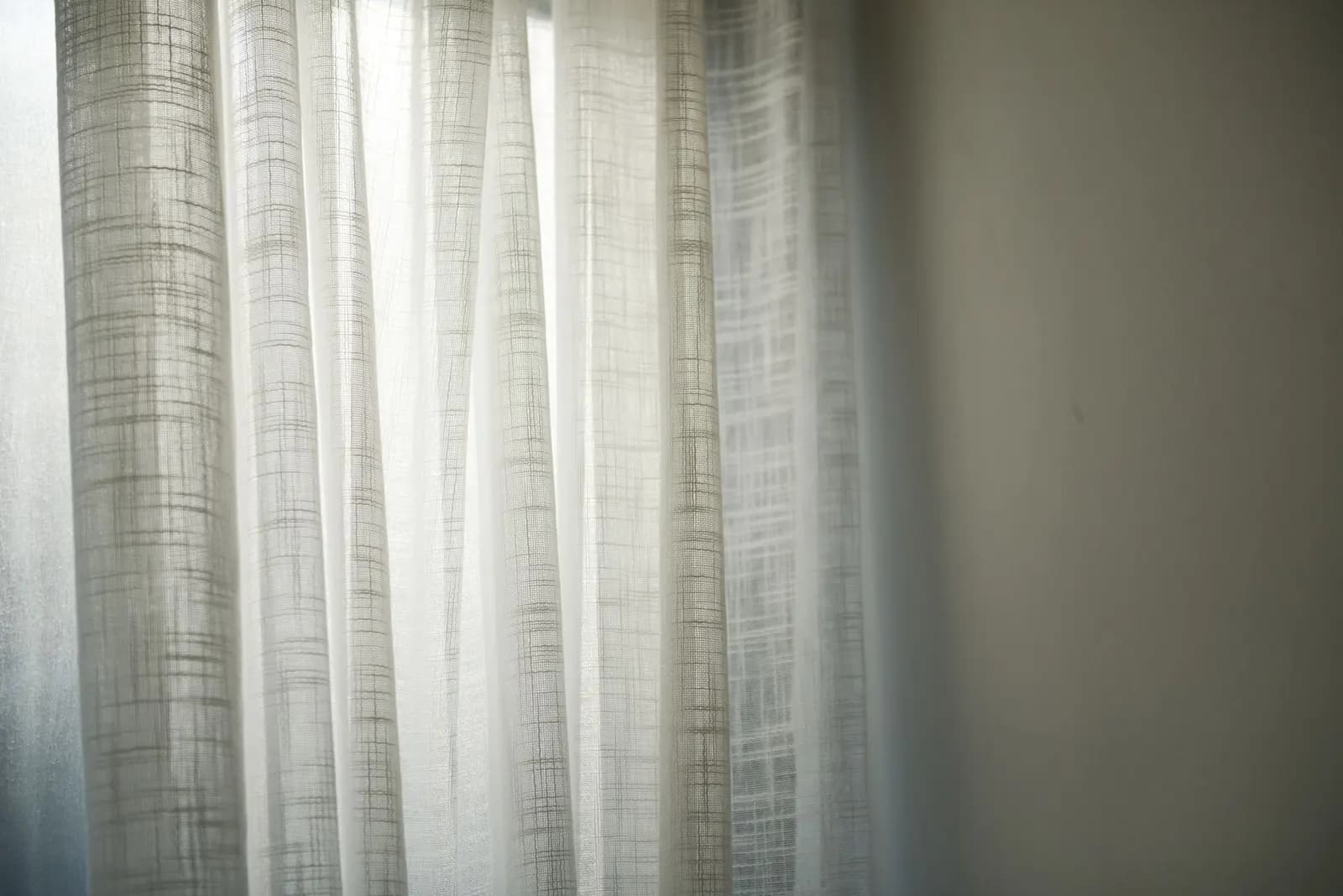
Dark, heavy curtains block light even when they're "open," because the stacked fabric covers part of the glass. Two fixes:
- White or ivory sheers for daytime. They soften the view and keep privacy while letting most of the light through. A pair runs about $10–$18 at IKEA and Walmart.
- Hang the rod wider than the frame, 6–10 inches on each side if you can, so open panels stack against the wall instead of the glass.
For warmth at night, layer: sheers on the inside, a lined panel behind or on a double rod. Our comparison of thermal curtains vs. cellular shades helps you choose the night layer. If you can't drill brackets, the options in our no-drill curtains and blinds guide work with sheers too.
Clear the sill and the glass
Plants, stacked books and a cluttered sill all eat light. Keep the bottom third of the window clear. Wash the inside of the glass once at the start of the season; winter grime and dried condensation spots dull it more than you'd expect.
Mirror Placement to Reflect Light
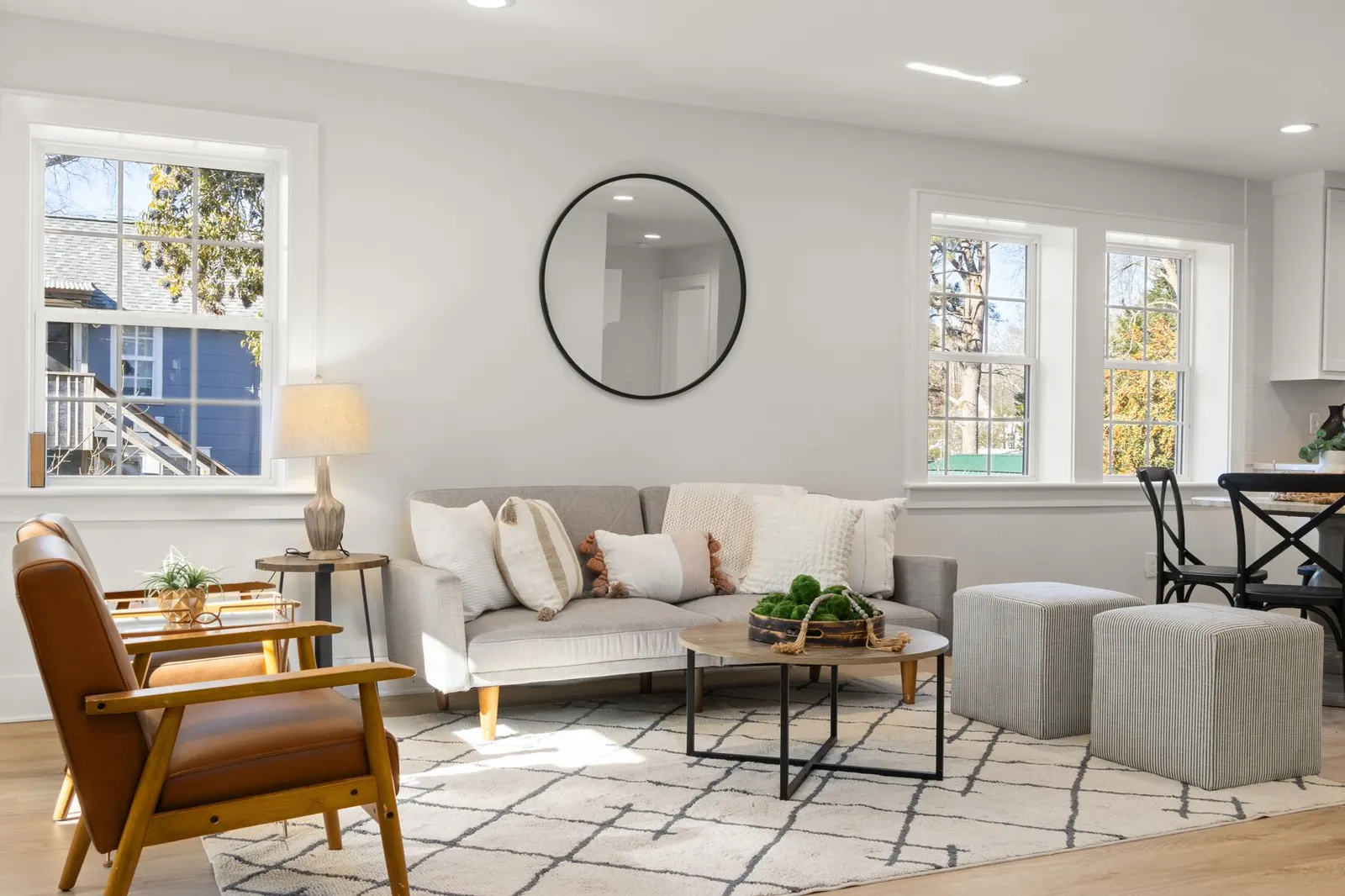
A mirror is the cheapest "window" you can add. Placement matters more than size.
- Across from the window: bounces daylight back into the room and doubles the view of the sky. Best when the view is decent.
- On a side wall, at a right angle to the window: catches light coming in at an angle and throws it deeper into a long, narrow room or a hallway.
- Behind a lamp: after dark, a mirror behind a table lamp doubles its glow.
Before you hang it, stand where the mirror will go and look at what it would reflect. A mirror facing a blank wall, a brick building or the TV adds glare, not light.
Hanging it in a rental
A thrifted framed mirror under 10 lb costs about $8–$15. For hanging, use picture-hanging strips only within the weight rating printed on the package, and never on textured walls, wallpaper or brick. A large mirror is safer leaned on a dresser or the floor behind furniture, so it can't slide.
Lighten Surfaces Without Painting
Dark surfaces absorb light; pale ones bounce it. You don't need to repaint to shift the balance.
- Textiles first. A pale rug over a dark floor, a cream or oatmeal throw on a dark sofa, and white or light gray bedding change a room's brightness more than any accessory. Washable slipcovers and flat-weave rugs are the budget route.
- Peel-and-stick wallpaper in a light, slightly textured pattern can brighten a dark accent wall. Test a small piece on a hidden spot first, because some adhesives pull paint when removed. Check your lease too.
- Ask about paint. Your landlord may allow a light neutral if you agree to repaint at move-out. Get it in writing.
- Edit dark objects. Swap one or two dark baskets, frames or lampshades for lighter ones.
For more ways to make walls and furniture feel lighter, see how to make a small room look bigger. Light, open-legged furniture helps there too.
Layer Lamps Like a Lighting Plan
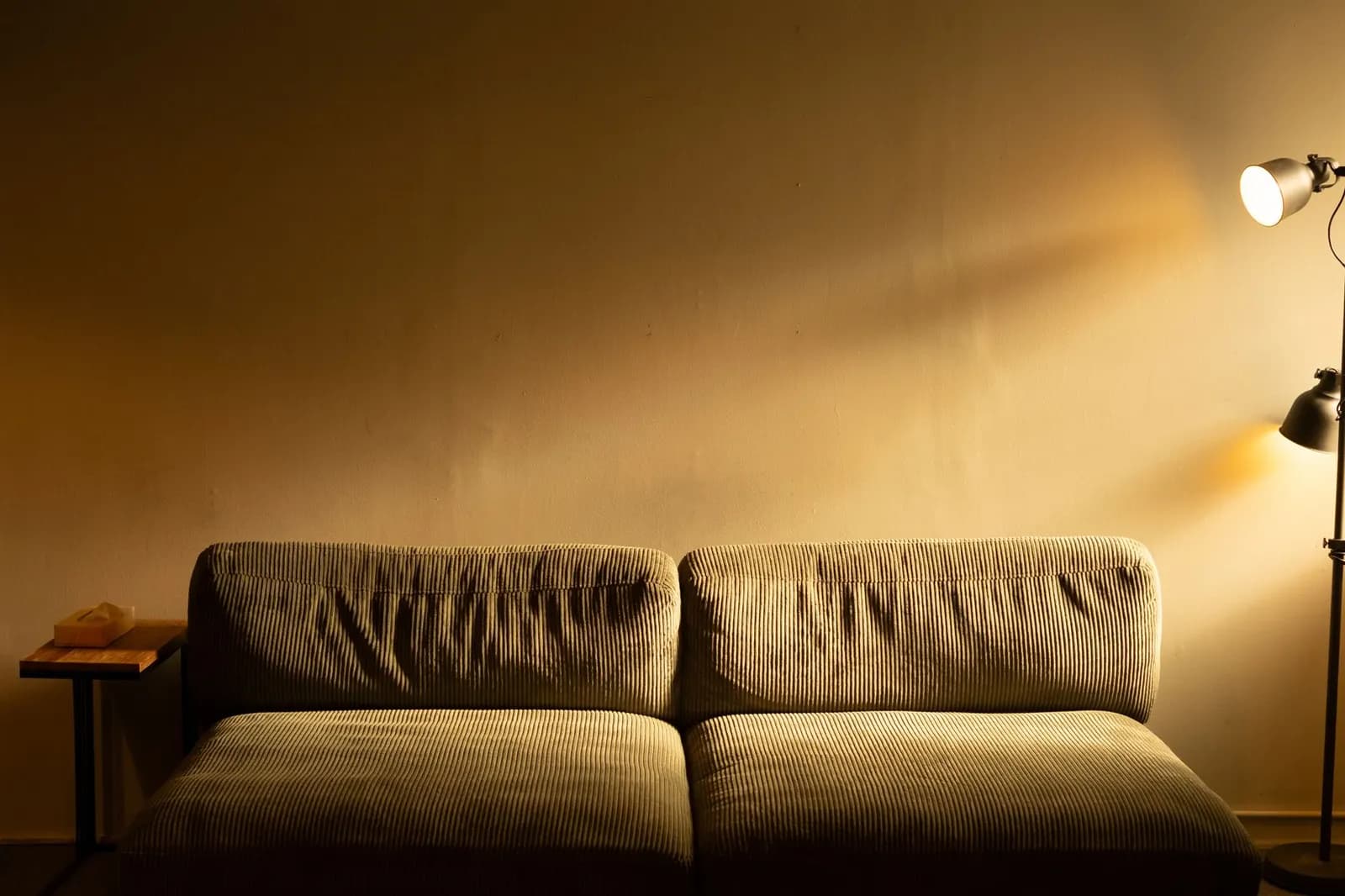
One ceiling light makes a room feel flat. Three or four small light sources at different heights make it feel bright and cozy at once.
The three layers
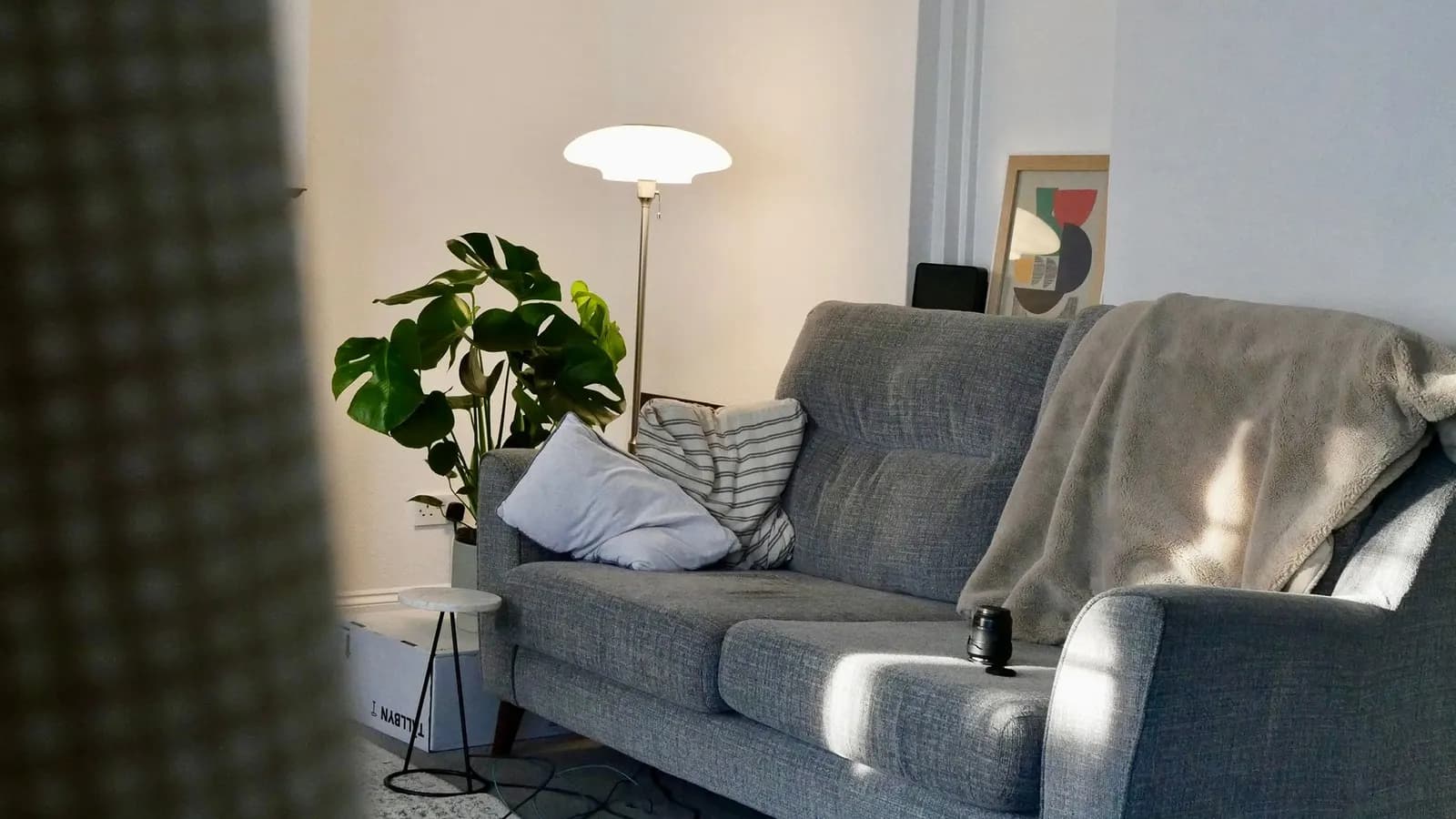
- High: bounce light. An uplight or tree-style floor lamp aimed at the ceiling spreads soft light across the whole room. Pale ceilings reflect it best. About $20–$35 at IKEA, Target or Walmart.
- Middle: table and floor lamps with fabric or paper shades, in the corners the ceiling light misses. Two in a living room is a good start.
- Low or accent: a plug-in sconce, LED strip or small lamp on a shelf or under a cabinet. This is the glow that makes a room feel inviting at 5 p.m.
Plug-in wall sconces run about $20–$35 and hang from one nail or a heavy-duty adhesive hook, with a paintable cord cover along the wall. Our renter lighting guide covers sconces, puck lights and cord management in depth.
Kelvin basics: warm vs. daylight
Light color is measured in Kelvin (K). ENERGY STAR explains that lower K means warmer, yellowish light, while higher K means cooler, bluer light. Its buyer's guide groups bulbs roughly like this:
| Label on the box | Kelvin | Good for |
|---|---|---|
| Soft white / warm white | 2200K–3000K | Most indoor rooms, evenings |
| Neutral white / cool white | 3500K–4100K | Kitchens, work spaces |
| Daylight | 5000K–6500K | Reading, desk tasks |
A simple rule for a gray winter: warm bulbs (2700K) in living rooms and bedrooms, one daylight bulb in the desk or reading lamp. Mixing several color temperatures in one room can look patchy, so keep each room mostly in one range.
Brightness is lumens, not watts
For brightness, ENERGY STAR says to look at lumens. An LED with at least 800 lumens matches an old 60-watt bulb; 1,600 lumens matches a 100-watt bulb. If a room still feels dim, check the lumens on the box before you buy another lamp.
ENERGY STAR also says its certified LED bulbs give the same brightness with up to 90% less energy and last 15 times longer than standard bulbs. That's what makes it reasonable to leave a few lamps on through a long, dark afternoon. You can find certified dimmable bulbs too; check the package if your lamp has a dimmer.
Smart Plugs and Timers for Morning Light
Waking up in the dark wears on you in a gray winter. A timer can't fix the sky, but it can make sure you never walk into a pitch-black kitchen.
- Mechanical plug-in timer ($6–$10): set a lamp to turn on 15 minutes before your alarm and off when you leave.
- Basic smart plug ($8–$15): schedule lamps from your phone, or set them to turn on at sunset automatically.
- Evening routine: have the low accent lamps come on at dusk so the apartment glows when you get home.
Check the maximum load on the timer or smart plug package and keep within it. Never put a space heater on a timer, smart plug or power strip. The US Fire Administration says to plug heaters directly into a wall outlet.
Cozy Evening Lighting
Bright by day, warm by night. Once it's dark out, turn off the overhead light and run only the warm lamps and accent lights. Close the night curtains so the black windows don't reflect the room back at you.
Candles vs. flameless
Candlelight is part of winter coziness, but real flames need rules. The US Fire Administration says to:
- Keep candles at least 12 inches from anything that can burn, including curtains, throws and stacked books.
- Blow them out when you leave a room or go to bed.
- Not use lit candles in bedrooms, bathrooms or sleeping areas.
- Consider battery-operated flameless candles, which USFA notes can look, smell and feel like real candles.
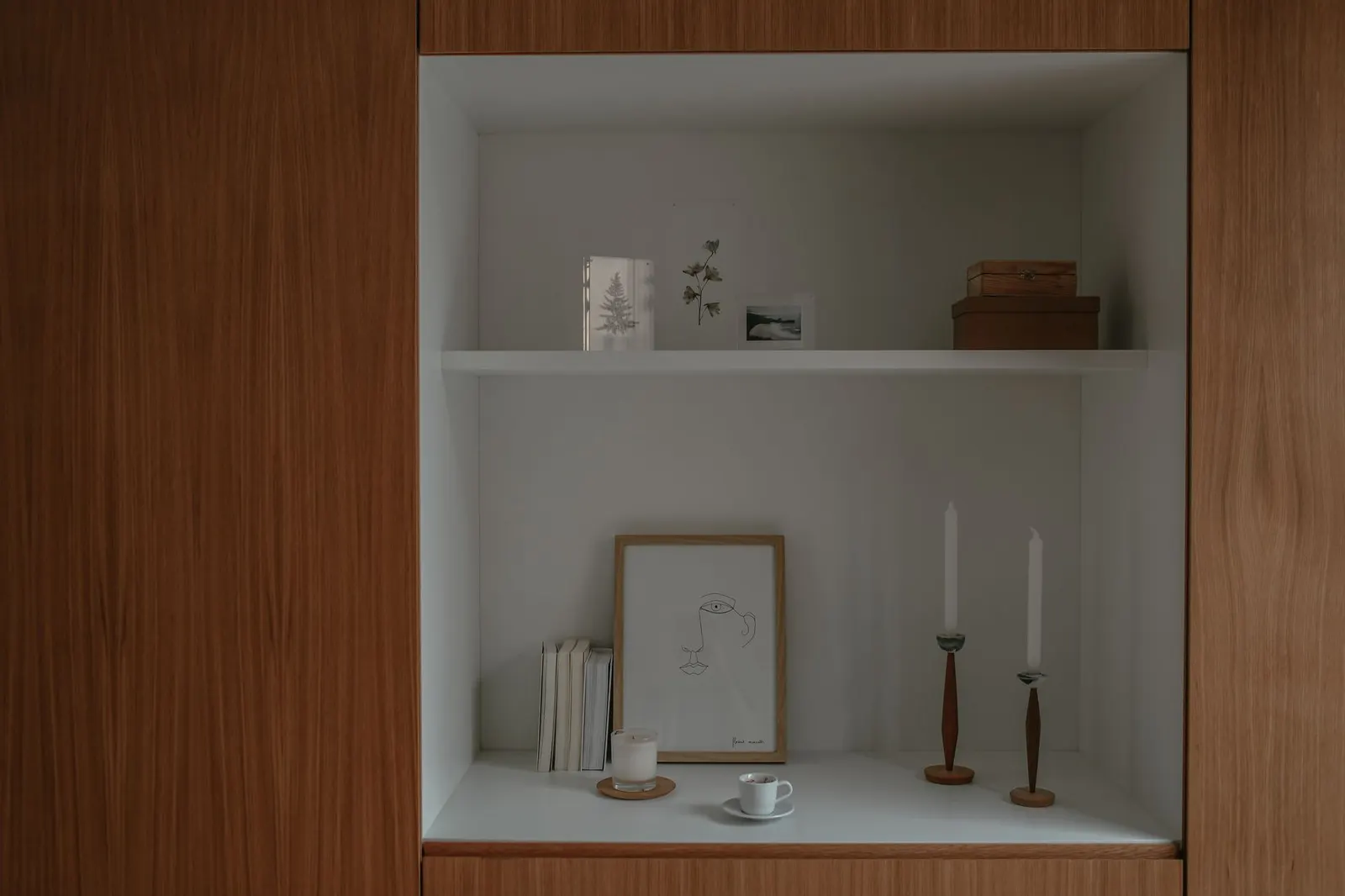
Flameless pillar candles with a built-in 6-hour timer are the easy choice for windowsills, bookshelves and bedrooms. They switch on every evening without you thinking about it, and there's no open flame near the sheers.
Condensation on Cold Windows
Damp winters plus cold glass equal wet windows. EPA notes that condensation can be a sign of high indoor humidity. If you see water collecting on windows, walls or pipes, EPA says to act quickly to dry the surface and reduce the source of the moisture.
What to do
- Wipe the glass and sill each morning with a microfiber cloth or a cheap squeegee. Keep one by the window.
- Run the bathroom fan or open a window when you shower, and use the kitchen exhaust fan when you cook. Both are on EPA's moisture-control list.
- Keep humidity below 60%, ideally 30–50%, per EPA. An $8–$12 hygrometer tells you where you are. A small dehumidifier helps in a damp bedroom.
- Keep curtain hems off wet sills. Sheers that brush wet glass can grow mildew. Shorten them with hem tape or tie them back, and wash them a couple of times a season.
If you have a humidifier running for dry skin or wood furniture, turn it down when the windows fog. Our guide to protecting wood furniture from dry winter air explains how to balance the two. And for warmth on the same budget, see how to keep your apartment warm in winter.
Mold that keeps coming back on a sill or wall is a building issue. Report it to your landlord and check local tenant resources.
A Note on Winter Blues and SAD
Short, gray days affect mood, and it's tempting to think the right lamp fixes that. This is a decor post, not medical advice, and decor does not treat seasonal affective disorder.
The National Institute of Mental Health describes light therapy as a mainstay treatment for winter-pattern SAD. It uses a specific light box rated at 10,000 lux, roughly 20 times brighter than ordinary indoor light, used about 30 to 45 minutes a day, usually first thing in the morning, from fall to spring.
NIMH notes that people with certain eye conditions or who take medications that increase sun sensitivity may need other options or medical supervision. If you think you might have SAD, talk to a health care provider about the benefits and risks of treatment options.
If a clinician recommends a light box, it can live in your brightest corner next to the morning coffee spot. Treat it as a medical device you've been advised to use, not as a decorating trick.
Common Mistakes
- Leaving curtains closed all day on south-facing windows. That's free daylight you're blocking.
- One bright overhead light and nothing else. It flattens the room and leaves the corners dark.
- Mixing warm and cool bulbs in the same room so it looks patchy.
- Buying by watts instead of lumens. Check lumens for brightness.
- Hanging a mirror that faces a wall or a dark view.
- Ignoring wet sills. Daily wiping prevents mildewed curtain hems.
- Candles in the bedroom or within a foot of sheers.
Splurge vs. Save
| Item | Save | Splurge |
|---|---|---|
| Daytime curtains | White sheer pair, $10–$18 (IKEA, Walmart) | Linen-blend light-filtering panels, $40–$90 (Target, West Elm) |
| Mirror | Thrifted framed mirror, $8–$15 (thrift stores) | Large arched floor mirror, $80–$200 (Target, IKEA, HomeGoods) |
| Bounce light | Basic uplight floor lamp, $20–$35 (IKEA, Walmart) | Arc or linen-shade floor lamp, $80–$180 (Target, West Elm) |
| Timed glow | Mechanical timer, $6–$10 (Walmart, Home Depot) | Smart bulbs that change color temperature, $15–$40 each (Home Depot, Amazon) |
Your Budget
Prices are approximate as of October 2026. Optional items are marked.
Budget breakdown: The $50 plan (daylight and bulbs)
$30–$53
| Item | Price range | Where to buy |
|---|---|---|
| White sheer or light-filtering curtain panels (pair) | $10–$18 | IKEA, Walmart, Target |
| Tension rod, if you have no rod to reuse(optional) | $8–$12 | Walmart, Target, Home Depot |
| Thrifted mirror (framed, under 10 lb) | $8–$15 | Thrift stores, Facebook Marketplace |
| LED bulbs, 2700K, 800 lumens (4-pack) | $6–$10 | Home Depot, Lowe's, Walmart |
| Plug-in timer or basic smart plug | $6–$10 | Walmart, Home Depot, Amazon |
| Total (without optional) | $30–$53 |
Prices are approximate as of October 2026 and vary by store and region. Prices are approximate as of October 2026 and vary by store, size and region.
Budget breakdown: The $100 plan (daylight plus layered lamps)
$70–$123
| Item | Price range | Where to buy |
|---|---|---|
| Everything in the $50 plan | $30–$53 | See above |
| Uplight or tree-style floor lamp | $20–$35 | IKEA, Target, Walmart |
| Plug-in wall sconce with cord cover | $20–$35 | IKEA, Target, Amazon |
| Flameless LED candles with timer (set of 3)(optional) | $8–$15 | Target, Walmart, Dollar Tree (single candles) |
| Total (without optional) | $70–$123 |
Prices are approximate as of October 2026 and vary by store and region. Prices are approximate as of October 2026 and vary by store, size and region.
The $100 plan lands around $70–$125 depending on store and what you already own. Start with daylight and bulbs, live with it for a week, and add lamps where the room still feels dim.
Frequently asked questions
How can I make my dark apartment brighter without changing the light fixtures?
Swap heavy curtains for white sheers, open coverings on south-facing windows during the day, and hang a mirror on a wall next to or across from the window. Then add plug-in light at three levels: a floor lamp that bounces light off the ceiling, a table lamp, and a plug-in sconce or LED strip. None of that touches the wiring.
Where should I put a mirror to reflect the most light?
A mirror on the wall across from a window bounces daylight back into the room and doubles the view. A mirror on a side wall, at a right angle to the window, throws light deeper into a long, narrow room. Check what it reflects first: a mirror facing a brick wall or a parking lot only repeats the gloom.
What color light bulb is best for a cozy apartment?
ENERGY STAR says lower Kelvin numbers mean warmer, yellowish light and higher numbers mean cooler, bluer light. Bulbs labeled soft white or warm white sit around 2200K to 3000K and suit living rooms and bedrooms. Daylight bulbs, around 5000K to 6500K, are better for a desk or reading lamp.
Do daylight bulbs or bright lamps help with seasonal depression?
Decor lamps are not a treatment. NIMH describes light therapy for winter-pattern seasonal affective disorder as a specific treatment: a 10,000-lux light box, about 30 to 45 minutes a day, usually first thing in the morning. If you think you have SAD, talk to a health care provider before trying a light box.
Why do my windows get wet inside in winter, and is it a problem?
Water on the inside of the glass is condensation, which EPA says can be a sign of high indoor humidity. Dry the glass and sill quickly, run bathroom and kitchen fans, and aim to keep humidity below 60%, ideally 30% to 50%. Left alone, damp sills and curtain hems can grow mold.
Are flameless candles safer than real candles?
The US Fire Administration suggests considering battery-operated flameless candles. If you burn real ones, keep them at least 12 inches from anything that can burn, blow them out when you leave the room or go to bed, and don't use lit candles in bedrooms, bathrooms or sleeping areas.
By [Author Name]. Prices are approximate as of October 2026. How we work.
Sources (7)
- Energy Saver: Tips on Saving Money and Energy in Your Home, US Department of Energy (2022-08)
- LED Bulbs Made Easy (Light Bulb Purchasing Guide), ENERGY STAR (US EPA) (2020-03-16)
- Seasonal Affective Disorder (NIH Pub. 23-MH-8138), National Institute of Mental Health (2023)
- Candle Fire Safety, US Fire Administration (FEMA) (2023-04-01)
- Portable Heater Fire Safety (flyer), US Fire Administration (FEMA) (2017-07)
- A Brief Guide to Mold, Moisture and Your Home, US EPA (2026-02-18)
- Building America Best Practices Vol. 7.3: Guide to Determining Climate Regions by County, US DOE / Pacific Northwest National Laboratory (2015-08)
Image credits: Photo: Curtis Adams · Pexels · Pexels License; Photo: Cats Coming · Pexels · Pexels License; Photo: Josh Sorenson · Pexels · Pexels License; Photo: Cup of Couple · Pexels · Pexels License.